

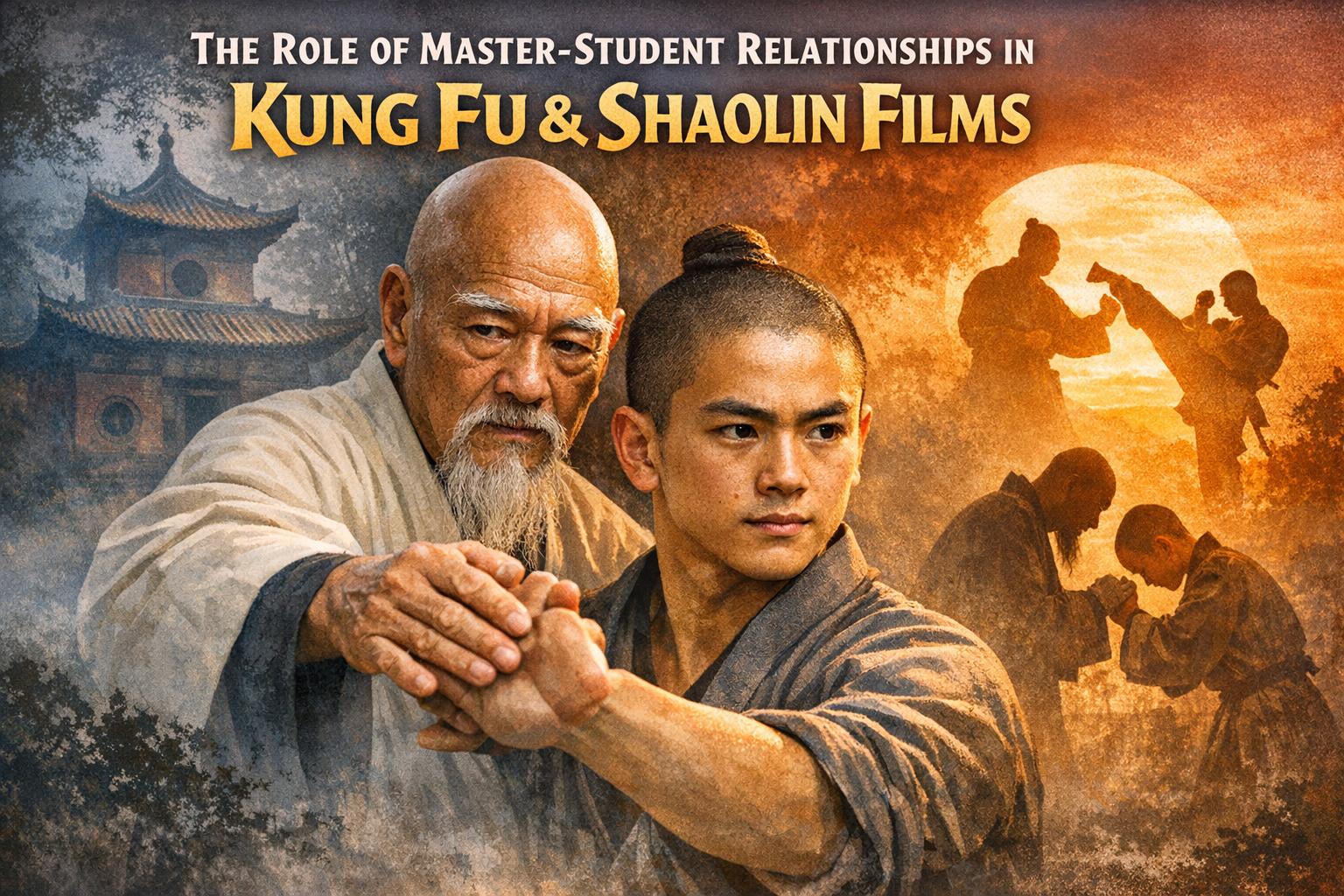
Introduction to Master-Student Dynamics in Kung Fu and Shaolin Films
In the realm of Kung Fu and Shaolin films, few elements stand out as prominently as the master-student relationship. This dynamic serves as a critical narrative mechanism, forging a path for character development and thematic exploration. Through the interaction between an experienced teacher and a developing disciple, filmmakers construct stories that move beyond physical combat into questions of discipline, morality, loyalty, and identity. The master does more than demonstrate fighting techniques; he or she often embodies a structured worldview that shapes the student’s ethical and philosophical framework.
Across decades of cinematic history, from early Hong Kong productions to contemporary international releases, the master-student bond has remained central to the genre. Even as choreography, cinematography, and global audiences have evolved, the underlying framework of disciplined mentorship continues to provide narrative cohesion. This consistency reflects both cultural traditions and durable storytelling patterns that resonate across cultural boundaries.
Historical Context of the Master-Student Tradition
The portrayal of masters and disciples in Kung Fu and Shaolin films is grounded in historical martial arts traditions. In many Chinese martial arts systems, instruction historically occurred within closed circles, often referred to as lineages. A student did not simply enroll in a school; he entered a relationship defined by hierarchy, trust, and obligation. The teacher was not merely an instructor but frequently assumed a role akin to that of a guardian, moral example, and transmitter of cultural knowledge.
Films draw heavily upon this structure. The concept of lineage becomes a narrative device that explains a student’s techniques, values, and allegiances. Rival schools or clans often appear in contrast, reinforcing the importance of loyalty to one’s master. In certain storylines, the student’s journey includes restoring a damaged lineage or protecting the master’s reputation. These elements ground the cinematic narrative in a broader cultural framework, drawing upon traditions shaped by Confucian and Daoist influences.
Foundational Aspects of the Master-Student Relationship
At its core, the master-student relationship in these films is rooted in a blend of martial instruction and personal growth. The master, typically an older and seasoned martial artist, offers guidance and discipline, prompting the student to undergo a transformative journey. This mentorship encompasses both physical rigor and mental conditioning. The master imparts highly structured forms, sparring techniques, conditioning exercises, and tactical principles, while simultaneously enforcing patience and humility.
Respect plays a vital role. The student is expected to show deference, often expressed through formal bows, ritualized greetings, and strict obedience. In turn, the master assumes responsibility for the student’s development. This mutual structure mirrors Confucian ideals that emphasize hierarchy balanced by moral duty. Authority is not arbitrary; it is justified by wisdom and experience.
The master’s authority in these films often stems from years of hardship, prior conflicts, or personal sacrifice. While the student typically begins as inexperienced or impulsive, exposure to disciplined training gradually reorients their priorities. The transformation is rarely instantaneous; the narrative devotes substantial time to depicting resistance, doubt, and incremental progress.
Martial Arts Training
The foundation of many Kung Fu and Shaolin films lies in training sequences that chart the student’s progression. These sequences often serve as visual metaphors for perseverance. Tasks such as carrying water, holding stances for extended periods, or performing repetitive strikes illustrate the demands of mastery. While some routines appear mundane, their purpose becomes evident as the student internalizes coordination, precision, and endurance.
Training scenes are often structured in phases. Initially, the student struggles with fundamentals. Movements appear awkward or inconsistent, and the master corrects mistakes with firm insistence. As the film progresses, small improvements accumulate. Viewers witness greater fluidity, stronger stances, and heightened awareness. These technical refinements parallel internal shifts in discipline and confidence.
In certain films, unconventional methods highlight the master’s creativity. The student might perform domestic chores or repetitive labor that doubles as conditioning. Such depictions underscore a key philosophical lesson: skill emerges not only from combat but from attention to detail and sustained effort. Mastery is shown as the outcome of structured repetition rather than innate talent.
Philosophical and Moral Lessons
Beyond physical instruction, the master frequently conveys philosophical insight. Discussions of balance, restraint, and situational awareness accompany demonstration of techniques. The student learns when to act and when to refrain, reinforcing the notion that martial arts serve ethical as well as practical functions.
The value of self-control often features prominently. Masters teach that strength without discipline leads to harm, whereas controlled force preserves harmony. Similarly, themes of humility and self-cultivation recur throughout the genre. The student frequently confronts situations that test patience or integrity, and the master’s guidance provides a framework for resolution.
In many narratives, the master refrains from offering direct answers. Instead, lessons are conveyed indirectly through metaphor, sparring, or carefully designed exercises. This pedagogical style emphasizes experiential learning. The student must internalize principles through practice rather than memorization. As a result, philosophical growth parallels physical refinement.
Archetypes of Masters and Students
While the specific details vary across films, certain archetypes recur. The master may appear as a disciplined monk from a Shaolin temple, an itinerant wanderer with concealed expertise, or a retired fighter drawn back into conflict. Some masters exhibit stern and austere personalities, demanding absolute obedience. Others employ humor or unpredictability as teaching tools, creating a contrast between outward eccentricity and inner precision.
Students likewise follow recognizable patterns. The novice might be an orphan seeking belonging, a villager confronting injustice, or a reckless youth whose impulsiveness undermines progress. The narrative arc typically traces the student’s correction of flaws through disciplined mentorship.
Although archetypes provide structure, many films add nuance. Masters may reveal personal regrets or limitations, and students may question traditional authority. These variations prevent the dynamic from becoming static and allow filmmakers to reinterpret familiar patterns.
Impact on Character Development
The interactions between master and student significantly shape both figures. For the student, the relationship catalyzes transition from inexperience to competence. Early failures establish vulnerability; gradual mastery marks tangible progress. By the film’s conclusion, the student’s skill level often reflects not only technical success but psychological maturity.
The master also undergoes transformation. In some narratives, the teacher begins in isolation, withdrawn from active life due to past trauma or disappointment. Accepting a student rekindles purpose. Through mentorship, the master confronts unresolved conflicts and reengages with the broader world.
This reciprocal influence deepens the narrative. Rather than presenting instruction as one-directional, films frequently depict growth as mutual. The student gains skill and perspective, while the master regains trust or closure.
Conflict and Resolution
Conflict frequently emerges within the master-student relationship. Initial reluctance may define the early stages, with the master refusing to teach and the student attempting to prove worthiness. Alternatively, ideological differences can arise if the student seeks vengeance while the master advocates restraint.
External threats intensify this tension. Rival schools, corrupt officials, or invading forces challenge both characters. These challenges often serve as tests of the student’s readiness. The climactic confrontation typically reveals the extent to which lessons have been internalized.
Resolution commonly involves the student acting independently while honoring the master’s teachings. Victory in combat signifies competence, but the manner of victory reflects ethical assimilation. If the student demonstrates restraint, loyalty, and strategic awareness, the arc reaches closure. In some narratives, the student establishes a new lineage, symbolizing continuity.
Cinematic Techniques and Symbolism
Filmmakers use specific cinematic strategies to emphasize the master-student dynamic. Training montages condense time while illustrating discipline. Close-up shots of posture, breathing, or hand placement underscore attention to detail. Spatial arrangements during dialogue scenes often reinforce hierarchy, with the master positioned slightly elevated or centered to convey authority.
Symbolism also plays a role. Natural elements such as water, wind, or stone frequently serve as metaphors for adaptability, resilience, and endurance. The master may invoke these images in explanation, integrating environment with instruction.
Music and pacing further distinguish stages of growth. Early training may be accompanied by measured rhythms, while climactic battles showcase controlled intensity. These audiovisual cues guide the audience’s perception of the student’s progress.
Cultural Significance
Kung Fu and Shaolin films are deeply embedded in cultural heritage. The master-student dynamic reflects traditional avenues of knowledge transmission in Chinese society, where apprenticeship models governed crafts, medicine, opera, and martial arts alike. By foregrounding mentorship, these films preserve a narrative of continuity.
The emphasis on lineage and respect underscores broader societal values related to hierarchy and reciprocity. While modern contexts often encourage individualism, the cinematic focus on disciplined mentorship highlights collective responsibility. Knowledge is portrayed not as a commodity but as an inheritance requiring stewardship.
International audiences have engaged with this framework as well. Although cultural specifics may differ, the universal structure of mentorship enables cross-cultural appreciation. The disciplined progression from novice to master aligns with storytelling traditions found in diverse societies.
Contemporary Adaptations
Modern Kung Fu films sometimes reinterpret the master-student relationship to address changing social contexts. Female masters or students appear more frequently, broadening representation within the genre. Urban settings replace monasteries, and globalized villains introduce new stakes.
Despite these updates, the essential framework remains intact. Structured mentorship, moral inquiry, and technical refinement continue to define the relationship. Even parody films rely on audience familiarity with these conventions to generate humor.
Digital effects and innovative choreography have expanded visual possibilities, yet the emotional and philosophical center still revolves around disciplined transmission of knowledge. This continuity suggests that the master-student dynamic serves not merely as aesthetic tradition but as narrative foundation.
Conclusion
The master-student relationship in Kung Fu and Shaolin films operates as more than a storytelling device. It structures character development, guides thematic exploration, and reflects historical practices of knowledge transmission. Through disciplined training, philosophical instruction, conflict, and resolution, the relationship charts a trajectory of transformation for both mentor and disciple.
By integrating martial technique with ethical cultivation, these films present mastery as a comprehensive endeavor. The student’s journey illustrates that skill alone is insufficient without restraint and understanding. The master’s role affirms the importance of guidance anchored in experience. Together, they form a dynamic that sustains the genre’s narrative coherence while preserving cultural tradition.
This article was last updated on: May 12, 2026