

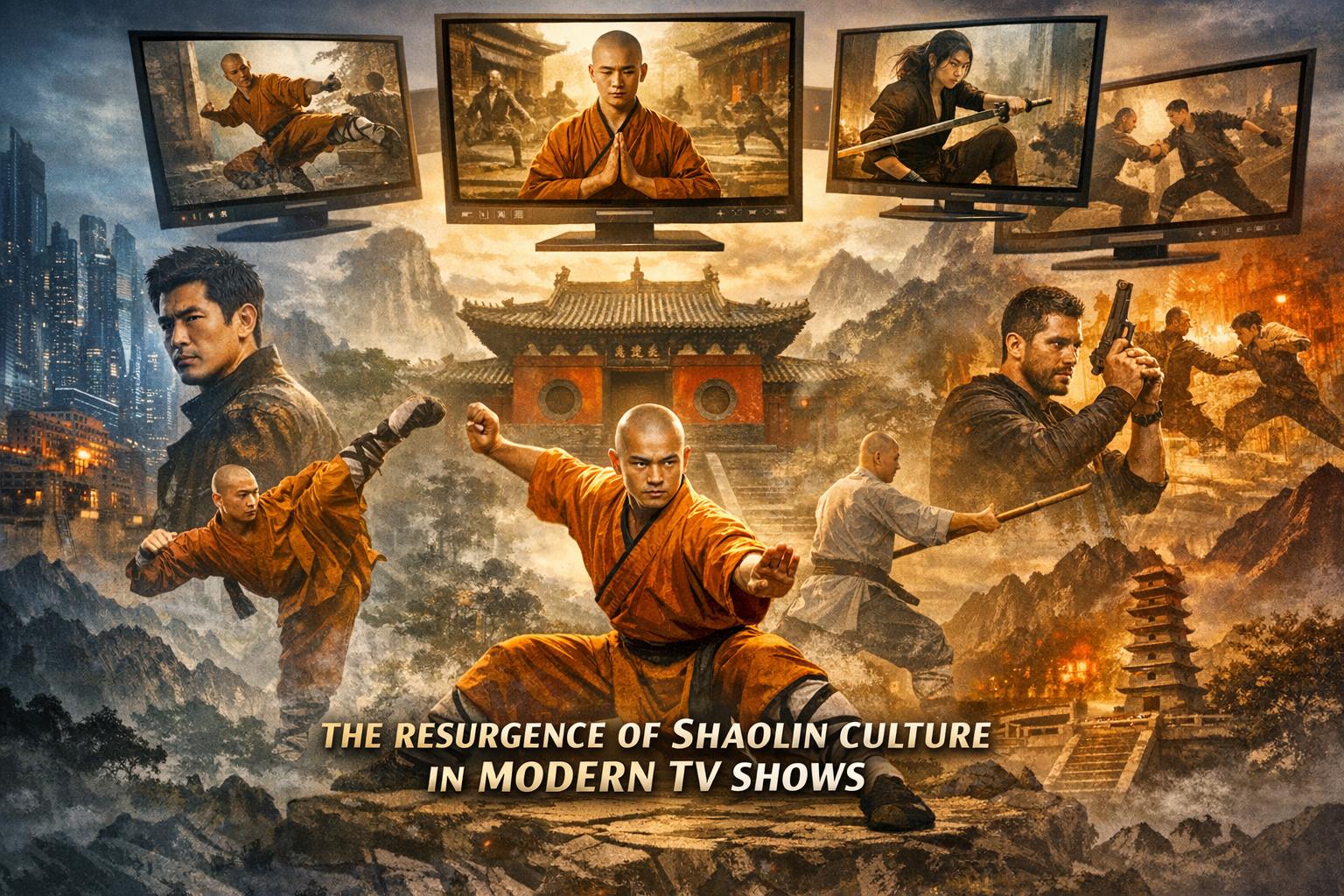
The Evolution of Shaolin Culture in Television
The presence of Shaolin culture in television has developed gradually over several decades, shaped by shifting audience interests, global media exchanges, and changing production technologies. Known for its integration of martial arts, Chan Buddhist philosophy, and disciplined communal life, the Shaolin tradition offers narrative material that translates effectively to serialized storytelling. Television, with its extended format and episodic depth, has proven particularly suitable for exploring both the physical and philosophical dimensions of this heritage.
In recent years, portrayals of Shaolin monks, temples, and martial systems have become more varied and internationally collaborative. Rather than presenting only stylized combat sequences, modern television frequently attempts to contextualize Shaolin culture within broader social, political, and spiritual frameworks. This evolution reflects the broader globalization of entertainment and a growing interest among audiences in culturally specific yet universally accessible narratives.
The Historical Background
Shaolin culture originates from the Shaolin Monastery, established in the 5th century during the Northern Wei dynasty in China. Situated on Mount Song in Henan Province, the monastery became associated with Chan Buddhism, known as Zen in Japan. Over time, Shaolin monks developed sophisticated systems of martial arts. While popular mythology sometimes exaggerates the origins of these arts, historical research confirms that physical training formed an essential component of monastic life, serving purposes ranging from health cultivation to self-defense.
The integration of meditation and martial discipline formed a defining aspect of Shaolin identity. Physical practice was not isolated from spiritual cultivation; instead, the two were considered mutually reinforcing. Methods of movement, breath control, and mental focus were understood as means of cultivating awareness and discipline. This integrated approach provided a narrative foundation well suited to dramatic interpretation.
Early cinematic depictions of Shaolin culture in the mid-20th century, particularly within Hong Kong cinema, laid groundwork for television adaptations. The commercial success of martial arts films in the 1960s and 1970s introduced a wide audience to Shaolin symbolism, iconography, and combat techniques. Television producers later adapted these visual traditions into serialized narratives, expanding on character development and institutional history. As television matured into a complex storytelling medium, it offered opportunities to explore the monastery’s philosophical dimensions in greater depth than film typically allowed.
Shaolin in Western Television
Western television began engaging with Shaolin themes in the 1970s, during a period marked by cultural exchange and curiosity about Asian philosophies. Series such as Kaiwan Kung Fu introduced Western viewers to fictional monks trained in Shaolin-inspired disciplines. Although these productions often blended historical accuracy with creative invention, they played a crucial role in introducing meditative practice, moral restraint, and martial precision to mainstream audiences.
In these early portrayals, Shaolin characters were frequently depicted as outsiders navigating unfamiliar societies. This narrative device allowed writers to contrast philosophical introspection with social conflict. Episodes commonly centered on ethical dilemmas resolved through a combination of physical defense and calm reasoning. While historical authenticity was sometimes limited, the programs contributed to a broader awareness of Buddhist vocabulary, monastic structures, and training regimens.
By the late 20th century, Western television began to exhibit more technical sophistication in representing martial arts. Improved choreography, international casting, and cooperation with trained martial artists enhanced realism. Productions increasingly acknowledged the importance of consulting cultural experts, especially as global audiences became more attentive to issues of representation and authenticity. Though fictionalized, these shows reflected a gradual shift from stereotype to more nuanced characterization.
Modern Depictions
Contemporary series have adopted more layered portrayals of Shaolin-inspired characters. Rather than presenting monks solely as enigmatic warriors, writers now often explore their formative experiences, institutional hierarchies, and internal conflicts. Programs such as Marco Polo and Into the Badlands incorporate stylized martial arts sequences while embedding them within broader political and social narratives.
In these productions, martial arts choreography typically serves multiple storytelling functions. Combat scenes establish character competence and physical discipline, but they also reveal psychological states. Controlled breathing, measured posture, and deliberate pacing are used to convey composure or internal tension. Such portrayals echo core elements of Shaolin training, where external motion is harmonized with internal awareness.
Modern television frequently situates Shaolin traditions within contemporary settings. Urban crime dramas, science fiction series, and historical epics have all incorporated Shaolin-inspired figures. By placing traditional training methods in modern environments, writers explore how ancient philosophies might inform responses to technological change, social fragmentation, or institutional corruption. This juxtaposition allows the Shaolin framework to function as a point of ethical reference, rather than merely a source of spectacle.
Visual production design also plays a significant role. Carefully constructed sets, including temple courtyards, meditation halls, and mountainous landscapes, reinforce the aesthetic vocabulary associated with Shaolin culture. Costume design emphasizes functional simplicity, reflecting monastic values of restraint and practicality. Meanwhile, contemporary cinematography techniques, such as fluid tracking shots and high-definition close-ups, allow viewers to observe the precision of movement central to martial performance.
Another defining feature of modern depictions is attention to training processes. Rather than presenting mastery as instantaneous, many series portray prolonged apprenticeships characterized by repetitive drills, physical exertion, and incremental improvement. This emphasis on sustained effort aligns with the historical understanding of Shaolin practice as disciplined and cumulative. It also lends credibility to narrative arcs in which characters gradually refine both physical technique and ethical judgment.
Global Influences and Collaborations
The globalization of media production has significantly influenced representations of Shaolin culture on television. International co-productions bring together directors, actors, fight choreographers, and scholars from multiple countries. Such collaborations often involve research trips, consultation with monastic communities, and adaptation of classical texts. This process generally increases both technical authenticity and cultural sensitivity.
Cross-cultural partnerships also expand narrative scope. Productions may incorporate linguistic diversity, depicting characters who transition between Mandarin, English, and other languages. This multilingual context reflects the real-world dispersion of Shaolin schools and practitioners across continents. It also enhances narrative plausibility, as characters negotiate identities shaped by both local traditions and global mobility.
Technological advancements have further shaped representation. High-definition filming captures complex sequences of staff fighting, forms practice, and acrobatic maneuvers with clarity. Digital enhancement allows safe staging of physically demanding sequences, while still preserving the impression of human skill. Streaming platforms, unconstrained by traditional broadcast schedules, enable longer story arcs that can examine philosophical themes alongside action-driven plots.
In addition, television has increasingly engaged with documentary formats. Non-fiction series have explored the daily lives of contemporary Shaolin monks, training regimens of international students, and the economic realities of temple tourism. These factual portrayals provide context that complements fictional dramatizations. They also demonstrate that Shaolin culture is not solely a historical artifact but a living, evolving tradition.
Educational programming has contributed to this evolution as well. Cultural analysis segments, interviews with martial arts historians, and behind-the-scenes features help audiences distinguish between embellished myth and documented history. By clarifying historical timelines and institutional developments, such programs contribute to more informed viewing experiences.
The reception of Shaolin-themed television varies across regions. In East Asia, audiences often assess authenticity by comparing screen portrayals to known historical narratives. In Europe and North America, viewers may approach the material with less prior knowledge, focusing instead on character development and visual spectacle. Producers often balance these expectations by presenting universal themes such as discipline, responsibility, and ethical restraint within culturally specific settings.
Television has also influenced the real-world perception of Shaolin institutions. International enrollment in martial arts academies has been partly attributed to exposure through serialized storytelling. While some viewers pursue training for fitness or self-defense, others cite interest in meditative or philosophical aspects introduced through television narratives. As a result, entertainment media and lived practice exist in reciprocal relationship, each shaping public understanding of the other.
Despite progress, representational challenges remain. Fictional narratives may still simplify doctrinal complexities or compress historical events for dramatic efficiency. Balancing accessibility with accuracy requires ongoing dialogue between creative teams and subject-matter specialists. Increasingly, producers recognize that informed representation enhances both artistic credibility and audience trust.
The continued evolution of Shaolin culture in television reflects broader transformations in media production. As global audiences gain greater access to diverse cultural content, expectations regarding authenticity and depth also increase. Shaolin traditions, with their documented history and adaptable philosophical core, provide a flexible yet grounded framework for storytelling.
Television’s ability to sustain long-form character development ensures that portrayals of Shaolin-inspired figures can move beyond archetype toward nuanced individuality. By exploring training, doubt, institutional responsibility, and moral decision-making, series expand the interpretive possibilities of a cultural heritage once presented primarily through stylized combat.
In examining these trends, it becomes clear that the resurgence of Shaolin culture on television is not confined to aesthetic fascination with martial arts. Instead, it reflects sustained engagement with questions of discipline, community, and ethical conduct. Through collaborative production models, technological innovation, and increasingly informed audiences, televised representations continue to adapt while maintaining connections to historical foundations.
As television continues to diversify across streaming platforms and international markets, Shaolin culture is likely to remain a recurring thematic presence. Its combination of physical artistry and philosophical inquiry offers narrative resources that align with contemporary storytelling demands. The medium’s expanding capacity for cultural nuance suggests that future portrayals may further integrate documented history, lived experience, and creative interpretation in ways that reinforce both entertainment value and informed understanding.
This article was last updated on: May 26, 2026