

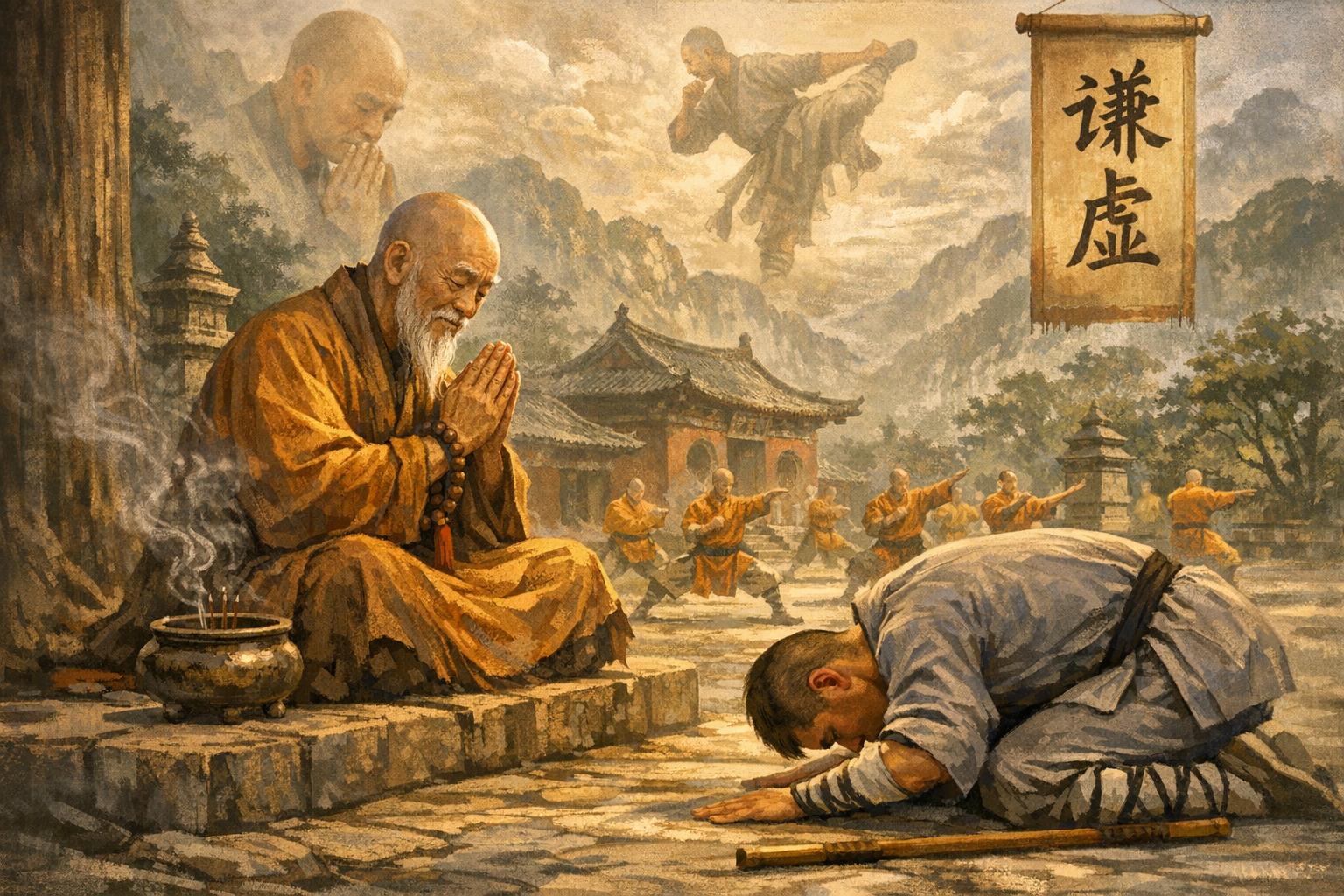
The Essence of Shaolin Kung Fu
Shaolin Kung Fu is widely recognized for its dynamic movements, structured forms, and disciplined training methods. However, beyond the external techniques lies a comprehensive philosophical system that shapes the inner life of the practitioner. At the center of this system stands the principle of humility. Within the Shaolin tradition, martial skill is not considered complete if it is detached from moral refinement. Physical techniques, no matter how advanced, are regarded as incomplete without the cultivation of character.
The Shaolin Temple, historically associated with the development and preservation of Kung Fu, has long emphasized the integration of Chan (Zen) Buddhist philosophy with martial practice. This integration defines the distinctive character of Shaolin training. The practitioner is not only learning how to strike, defend, and maneuver, but also how to regulate thought, conduct, and intention. In this framework, humility is not presented as weakness or self-deprecation; instead, it represents clarity about one’s position within a larger discipline and community. It shapes how students approach teachers, fellow practitioners, and their own development.
Through centuries of practice, the Shaolin system has preserved the idea that true mastery continues to expand rather than conclude. Even highly accomplished monks describe themselves as students. This perspective establishes humility as a continuous orientation rather than a temporary stage. The art is understood as vast, with each generation inheriting knowledge while recognizing that deeper understanding remains possible.
Understanding Humility in Shaolin Practice
Within Shaolin practice, humility begins with the recognition of limitation. When a novice enters training, the physical demands of stances, basic strikes, and conditioning exercises quickly reveal gaps in strength, flexibility, and endurance. Rather than concealing these weaknesses, the structure of training exposes them in a controlled and constructive manner. Students bow to instructors and training partners, acknowledging both respect and the acceptance of guidance. This ritual is not symbolic alone; it reinforces the social and moral dimension of the art.
Humility also moderates ambition. In many competitive environments, achievement is measured by surpassing others. In Shaolin training, progress is measured by refinement of technique and steadiness of mind. Advancement requires consistency over time, not dramatic displays of ability. If a practitioner attempts to advance too quickly without mastering fundamentals, weaknesses become apparent. Through repetition of foundational exercises, students come to understand that skill arises from sustained effort rather than self-promotion.
Communal living historically associated with the temple further reinforced humility. Daily responsibilities were shared. Cooking, cleaning, and maintenance were not segregated from martial training. Participation in ordinary tasks reminded monks that discipline applied equally to every activity. This structure reduced opportunities for arrogance. Even those who reached high levels of proficiency remained integrated within the same communal rhythms as beginners.
The concept of humility in Shaolin practice is closely related to self-cultivation. Improvement is ongoing, and each stage reveals another aspect requiring refinement. Recognizing this continuous process prevents complacency. It encourages practitioners to evaluate themselves honestly while avoiding harsh self-judgment. Humility becomes a balanced awareness: acknowledging both progress and unfinished work.
The Role of Meditation
Meditation occupies a central place in Shaolin teachings and functions as a direct method for cultivating humility. In seated meditation, external movement ceases, and attention turns inward. Thoughts, impulses, and reactions become more visible. Practitioners often observe the tendency of the mind to claim credit, defend self-image, or compare itself with others. Through sustained practice, these patterns are recognized without attachment.
This process gradually weakens the influence of ego-driven motivations. When a student performs a movement well, meditation helps prevent pride from solidifying into identity. When mistakes occur, meditation supports acceptance rather than denial. In both success and failure, attention returns to steady awareness. The practitioner learns that experiences are temporary and that identity need not expand or contract in response to each event.
Breathing practices associated with meditation further reinforce humility. Controlled breathing emphasizes interdependence between body and mind. Each inhalation and exhalation demonstrates that life is supported by processes beyond conscious command. Recognition of this natural rhythm encourages a grounded perspective. The practitioner becomes attentive to subtle changes in posture, balance, and internal state, fostering a more measured approach to training.
Meditation also strengthens patience. Extended periods of stillness can reveal discomfort, restlessness, or distraction. Rather than reacting, practitioners observe these sensations and allow them to pass. This discipline translates into martial training, where patience is essential for mastering complex sequences. Impulsiveness gives way to considered response. Over time, meditation guides students toward an understanding that progress does not require external validation.
Physical Training and Humility
Shaolin physical training is structured to challenge both the body and the mindset of the practitioner. Basic stances such as the horse stance require sustained muscular engagement. Early training may involve holding positions for extended durations, revealing fatigue and instability. Students encounter their limits directly. This confrontation does not aim to diminish confidence but to establish accurate self-assessment.
Repetition forms the backbone of skill acquisition. A single movement may be practiced hundreds or thousands of times. While this method refines coordination and strength, it also discourages haste. The practitioner learns that excellence arises from disciplined repetition rather than isolated exertion. Humility develops as students accept the necessity of gradual improvement.
Partner drills add another dimension. Working with others requires controlled force and attentiveness. A practitioner who lacks humility may attempt to dominate exchanges, resulting in imbalance or potential injury. Training emphasizes mutual benefit, where each partner contributes to the other’s development. Respect becomes practical, not abstract. Adjustments are offered without condescension, and corrections are received without resentment.
In advanced stages, techniques may appear impressive to observers. However, the internal principle remains unchanged. Practitioners are reminded that technique exists for defense and discipline, not display. Historical accounts of Shaolin emphasize restraint. Mastery is demonstrated not by initiating conflict but by maintaining composure and avoiding unnecessary confrontation. The disciplined use of skill reflects humility in action.
Physical training also teaches adaptation. Injuries, fatigue, and aging alter the body’s capabilities. Humility allows practitioners to adjust without abandoning practice. Movements can be modified, speed reduced, or emphasis shifted toward internal aspects of training. Acceptance of change sustains long-term engagement with the art.
Shaolin Philosophy in Modern Times
In contemporary contexts, Shaolin Kung Fu has expanded beyond the temple environment to urban schools, performance stages, and international academies. This expansion has introduced new audiences to the art’s techniques. At the same time, modern conditions present challenges to the preservation of philosophical foundations. Commercialization and competitive sports culture can shift attention toward visibility and achievement.
Despite these influences, many instructors continue to transmit the underlying values associated with Shaolin practice. Humility remains central to instruction. Formal greetings, structured classes, and codes of conduct preserve a sense of continuity with earlier traditions. Students are reminded that training involves responsibility, including the ethical use of acquired skills.
In modern society, where individual recognition is often prioritized, Shaolin teachings offer a structured approach to balanced development. Humility does not conflict with ambition; instead, it guides ambition within ethical boundaries. A practitioner may aim for technical excellence or competitive success while maintaining awareness of interdependence and respect for others.
The educational dimension of Shaolin training has proven relevant beyond martial contexts. Skills cultivated through disciplined practice, such as patience, attentiveness, and self-regulation, transfer to professional and academic settings. Humility supports collaboration and realistic goal-setting. It encourages individuals to seek guidance when necessary and to acknowledge the contributions of peers.
Digital access to information has made learning resources widely available. Instructional materials, historical discussions, and community forums provide opportunities for engagement. However, the depth of Shaolin philosophy is most effectively understood through direct practice under qualified guidance. The embodied experience of repetition, correction, and reflection shapes humility more reliably than theoretical study alone.
As the tradition continues to evolve, its emphasis on moral cultivation remains a stabilizing force. Practitioners across different cultures interpret the teachings through their own contexts, yet the central insight persists: technical achievement without character development is incomplete. Humility anchors the practice, ensuring that strength and skill remain aligned with responsibility.
Ultimately, the essence of Shaolin Kung Fu lies in its integration of body and mind. Techniques refine movement; meditation refines awareness; communal practice refines conduct. Through these interconnected disciplines, humility emerges not as a decorative virtue but as a practical necessity. It sustains progress, moderates ego, and aligns personal growth with broader ethical principles. In this way, Shaolin Kung Fu continues to present a coherent model of disciplined training grounded in steady self-cultivation.
This article was last updated on: July 14, 2026