

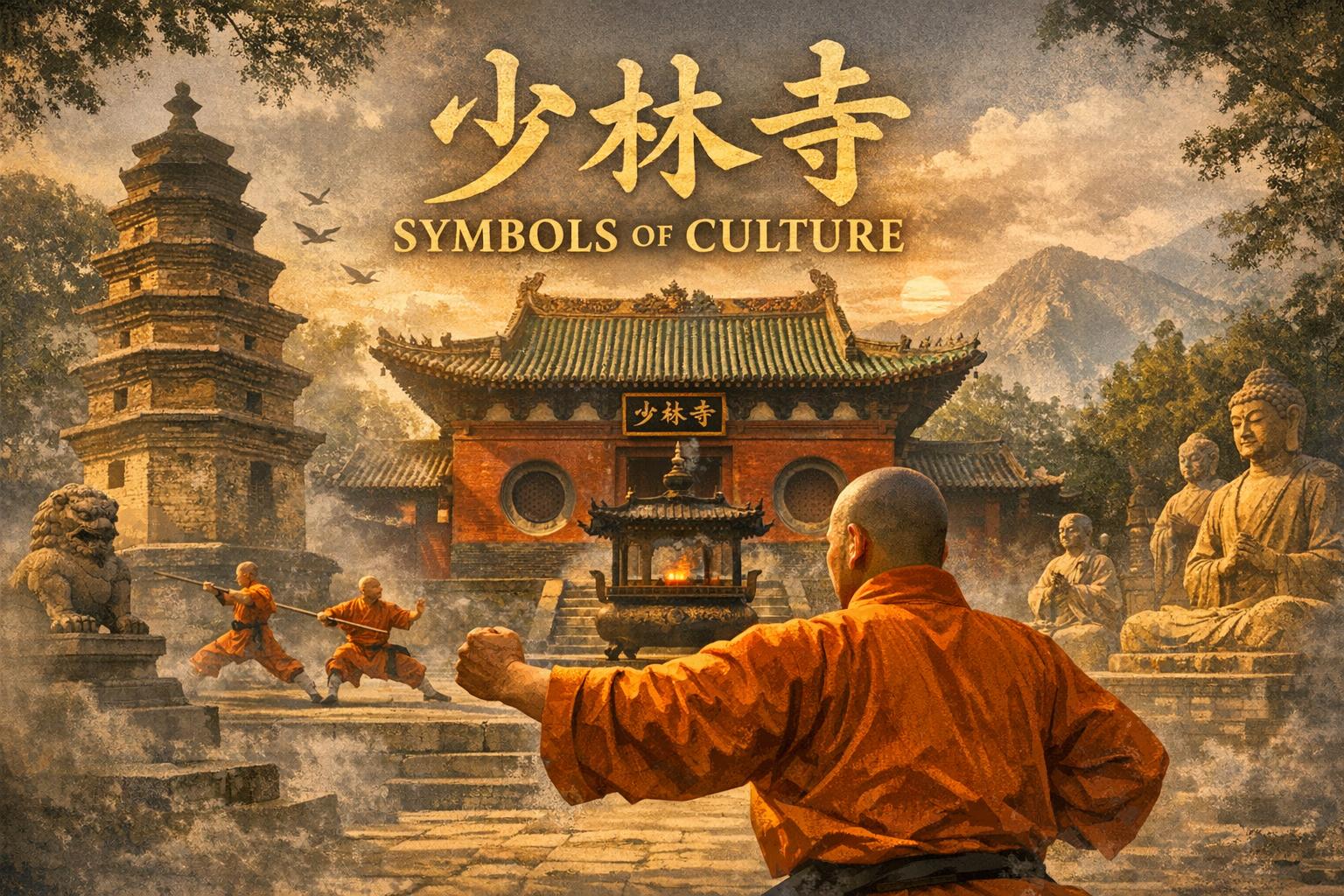
Historical Significance of Shaolin Temples
The Shaolin temples, primarily located on Mount Song in Henan Province, occupy a distinctive position in the historical development of Chinese religion, philosophy, and martial traditions. Founded in 495 CE during the Northern Wei Dynasty under Emperor Xiaowen, the Shaolin Monastery was originally established to accommodate the Indian monk Batuo (also known as Buddhabhadra), who was invited to teach Buddhist scriptures in China. From its beginnings, the monastery functioned as a center for translation, meditation, and scholastic study, contributing to the broader transmission of Buddhism along the Silk Road and into East Asia.
The temple’s location near the ancient capital of Luoyang allowed it to participate in intellectual and political exchanges that shaped early medieval China. Over time, Shaolin became associated with Chan Buddhism, a school that emphasized meditation and direct insight into one’s nature. This association was later connected to the semi-legendary figure of Bodhidharma, who is traditionally credited with transmitting Chan teachings from India to China. While the historical details remain debated among scholars, the narrative linking Bodhidharma to Shaolin contributed significantly to the monastery’s identity and prestige.
Beyond its religious role, the Shaolin Monastery gained recognition for its historical involvement in regional politics and military affairs. During the Tang Dynasty, Shaolin monks were reported to have assisted Li Shimin, who later became Emperor Taizong, in military campaigns. As a result, the monastery received imperial patronage and land grants. These events reinforced the perception that Shaolin was not only a religious institution but also an active participant in state affairs. Throughout successive dynasties, including the Song, Yuan, Ming, and Qing periods, the temple underwent cycles of expansion, destruction, and restoration, reflecting broader social and political transformations within China.
The enduring presence of Shaolin across more than fifteen centuries demonstrates its ability to adapt while maintaining continuity. Fires, warfare, and political reforms periodically disrupted monastic life, yet the institution persisted. This resilience has contributed to its reputation as a symbol of stability and cultural continuity within Chinese civilization.
Cultural Influence
The cultural influence of Shaolin temples extends far beyond their geographic setting. In traditional Chinese society, monastic institutions functioned as centers of education, manuscript preservation, and moral instruction. Shaolin’s reputation for disciplined living and martial proficiency gave it a distinct cultural profile among Buddhist monasteries. Over time, literary works, operatic performances, and local folklore incorporated stories about Shaolin monks, embedding the temple in the broader imaginative landscape of China.
In the twentieth century, Shaolin achieved international visibility through cinema and popular literature. Martial arts films produced in Hong Kong during the 1970s and 1980s frequently portrayed Shaolin monks as disciplined practitioners committed to justice and personal cultivation. These portrayals, though often dramatized, contributed to the globalization of Shaolin’s image. The monastery became associated not only with religious devotion but also with extraordinary physical discipline and moral fortitude.
This cinematic representation affected public perception of Chinese culture more broadly. Shaolin came to symbolize a synthesis of philosophical introspection and physical rigor. It offered a counterpoint to purely secular depictions of martial arts by situating combat training within a framework of ethical restraint and spiritual cultivation. As a result, Shaolin was viewed not simply as a historical site but as a cultural institution with contemporary relevance.
The spread of Shaolin-themed schools and cultural centers in Europe, the Americas, Southeast Asia, and Africa further expanded its global profile. These institutions often combine instruction in martial arts with educational programs on Chinese philosophy, calligraphy, and traditional medicine. While the accuracy and authenticity of such schools vary, their existence demonstrates the far-reaching cultural appeal of the Shaolin model.
Martial Arts Heritage
Shaolin Kung Fu constitutes one of the most recognized aspects of the temple’s heritage. Its development reflects a gradual process rather than a single founding event. Historical records from the Ming Dynasty document the presence of organized martial training among Shaolin monks, particularly in the use of the staff. Manuals and military treatises from this period mention Shaolin fighters as skilled practitioners who contributed to local defense efforts, including campaigns against banditry and piracy.
The system known today as Shaolin Kung Fu encompasses a wide range of forms, techniques, and training methods. These include unarmed routines, weapon practice, conditioning exercises, and choreographed sequences designed to cultivate coordination and endurance. The technical diversity of Shaolin martial arts illustrates centuries of refinement and adaptation. While popular narratives often attribute its origin solely to religious instruction, historians note that it likely evolved through exchanges between monastic communities and lay martial artists.
What distinguishes Shaolin martial practice is the integration of physical training with moral and meditative disciplines. Movements are executed with attention to posture, breathing, and intention. Practitioners are encouraged to cultivate concentration, restraint, and respect. In this context, martial training is framed not simply as combat preparation but as a method of regulating the body and mind.
The preservation of traditional forms has become a central concern in modern times. Efforts to document routines, standardize instruction, and promote demonstration teams reflect an awareness of cultural heritage preservation. Public performances and competitions have introduced Shaolin techniques to international audiences, yet they also raise questions about authenticity and commercialization. Despite these debates, the martial component remains integral to Shaolin’s identity.
Spiritual and Philosophical Teachings
While martial arts receive considerable public attention, the spiritual and philosophical dimensions of Shaolin remain foundational. The temple is associated with Chan Buddhism, a tradition emphasizing meditation as a direct path to insight. In Chan practice, the cultivation of awareness and the disciplined observation of thought processes are central. This approach aligns with the broader Mahayana Buddhist emphasis on compassion and wisdom.
Meditation practices at Shaolin include seated contemplation, chanting of sutras, and disciplined adherence to monastic rules. The integration of physical exertion and contemplative stillness reflects a holistic perspective on human development. Physical training is intended to support mental clarity rather than distract from it. This interdependence of body and mind differentiates Shaolin from institutions that separate intellectual study from physical cultivation.
The philosophical teachings associated with Shaolin stress impermanence, ethical conduct, and self-regulation. Monks undertake vows that govern daily behavior, including commitments to non-violence, honesty, and moderation. The apparent tension between martial skill and the principle of non-harm is addressed through an emphasis on defensive application and moral responsibility. Martial competence is framed as a means of protection rather than aggression.
In addition to meditation and ethical instruction, Shaolin has historically participated in scriptural translation and commentary. Monks contributed to the interpretation of Buddhist texts and engaged in debates concerning doctrine and practice. The temple therefore functioned as both a physical training ground and an intellectual center, reinforcing its multifaceted character.
Global Impact and Modern Relevance
In the contemporary period, Shaolin temples serve as sites of heritage tourism, religious pilgrimage, and international exchange. Visitors travel to Mount Song to observe monastic routines, attend performances, and learn about Buddhist teachings. The influx of tourism has prompted infrastructural development and increased state involvement in the preservation of cultural landmarks.
Modern Shaolin monks often participate in international tours, academic conferences, and intercultural dialogues. Through demonstrations and workshops, they present martial techniques alongside explanations of Buddhist philosophy. This engagement has positioned Shaolin as a mediator between Eastern and Western conceptual frameworks concerning discipline, mindfulness, and physical training.
At the same time, modernization has introduced challenges. Commercial activities associated with branding and large-scale performances have prompted discussion about the balance between economic sustainability and spiritual integrity. Administrators and religious leaders must navigate these tensions while maintaining the monastery’s historical mission.
Shaolin’s continued relevance can be understood in terms of its capacity to represent continuity amid change. It embodies longstanding religious traditions while interacting with global modernity. Educational initiatives, documentary projects, and academic collaborations further extend its reach beyond monastic boundaries.
The Shaolin temples thus occupy a distinctive position at the intersection of religion, culture, and physical discipline. Their historical development illustrates the integration of imported Buddhist teachings into Chinese society. Their martial traditions demonstrate how physical practices can coexist with ethical and contemplative ideals. Their modern role reflects ongoing negotiation between preservation and adaptation.
Scholarly inquiry into Shaolin’s past and present continues to produce new interpretations, drawing on archaeological findings, textual analysis, and comparative studies. Such research provides greater clarity regarding the complex evolution of the temple and its traditions. As a living institution with deep historical roots, Shaolin remains an influential participant in discussions about cultural heritage, religious practice, and the global circulation of ideas.
This article was last updated on: March 31, 2026