

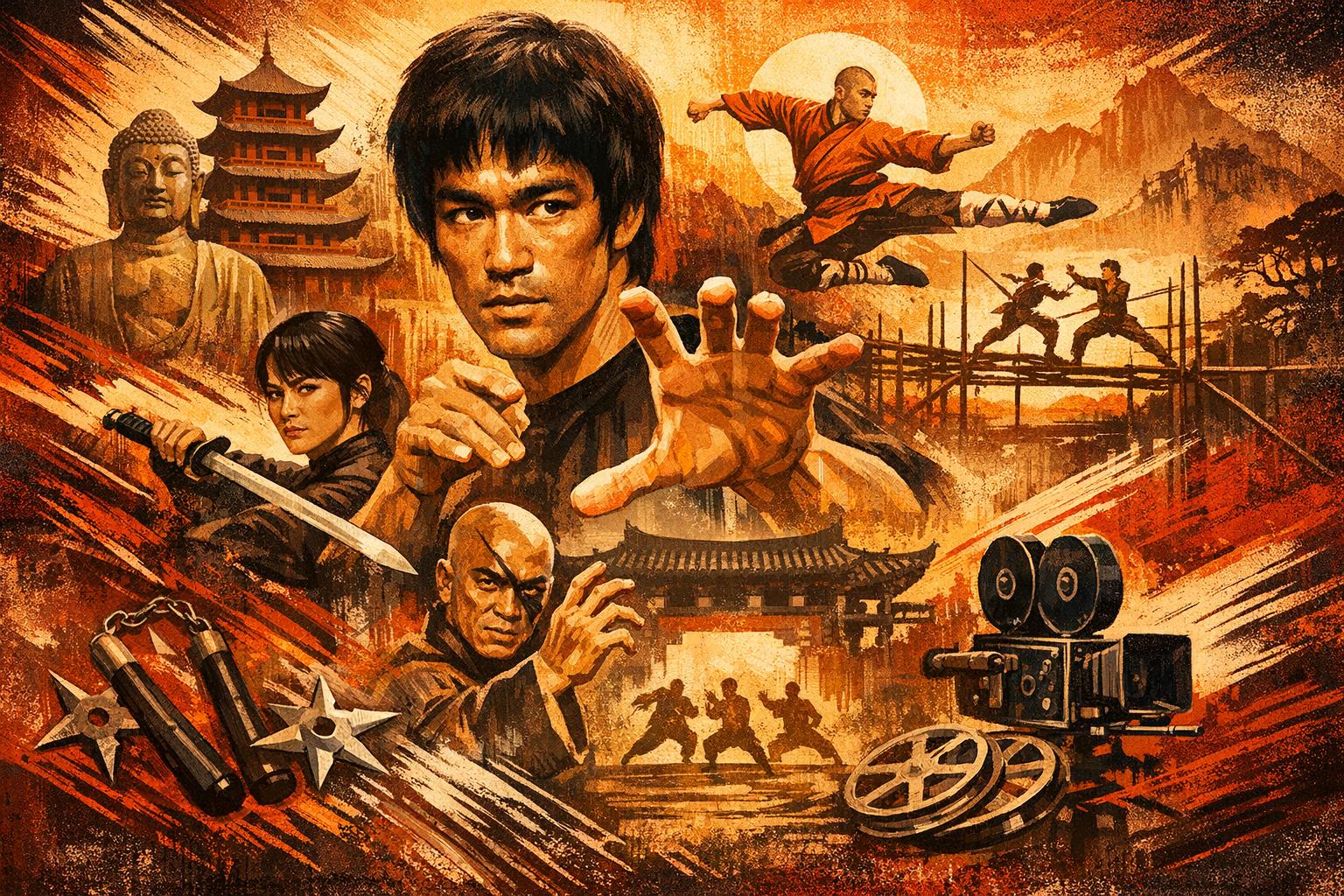
The Evolution of Kung Fu in Cinematic History
Kung Fu cinema represents one of the most distinct and recognizable traditions in global film history. Its development reflects a dynamic interaction between martial arts practice, theatrical convention, technological innovation, and shifting audience expectations. Over the past century, the visual and narrative language of Kung Fu films has evolved from stage-inspired dramatizations to internationally distributed productions that influence action filmmaking worldwide. This evolution illustrates how a culturally specific tradition can adapt to new industrial conditions while retaining identifiable aesthetic principles.
Origins and Traditional Influences
Kung Fu as a martial discipline predates cinema by centuries. Rooted in systems of combat developed for self-defense, military training, and physical cultivation, it gradually absorbed philosophical frameworks from Confucianism, Daoism, and Buddhism. Training emphasized not only physical strength and technique but also discipline, morality, and self-control. These elements would later inform cinematic narratives that portrayed martial artists as ethical agents rather than merely skilled fighters.
In early Chinese cinema of the 1920s and 1930s, martial arts themes were shaped by existing theatrical traditions. Chinese opera, with its codified gestures, acrobatics, and symbolic staging, provided filmmakers with a vocabulary of movement and stylization. Performers trained in opera brought with them a heightened physicality and precision that translated effectively to film. Rather than striving for realism, these early works embraced spectacle and mythic storytelling.
Another major influence came from wuxia literature, a genre centered on wandering martial heroes who operated according to personal codes of justice. Wuxia stories often depicted historical or quasi-historical settings and involved conflicts between righteous swordsmen and corrupt officials or rival clans. These narratives provided thematic continuity when adapted for cinema, emphasizing loyalty, revenge, and moral integrity. Even as filmmaking techniques modernized, the underlying structure of the wandering hero and the restoration of ethical balance remained central to the genre.
The Transition from Stage to Screen
The migration from theatrical performance to motion pictures required significant adjustments in presentation. Stage combat relied on exaggerated gestures visible from a distance. Early film directors initially preserved this broad style, positioning cameras at fixed angles and allowing performers to execute extended sequences within a single frame. Over time, filmmakers recognized the potential of editing and camera movement to create greater impact.
By the mid-20th century, Hong Kong had emerged as the primary production center for martial arts films. Studios systematized training regimens for performers and refined combat choreography to suit cinematic pacing. Editing became faster, allowing directors to manipulate rhythm and intensify action. Close-up shots highlighted expressions and emphasized moments of tension before decisive strikes. The camera no longer served merely as an observer but became an active participant in constructing kinetic energy.
Sound design also played a role in shaping audience perception. The addition of amplified impact sounds, rhythmic music, and synchronized vocal expressions enhanced the sensory intensity of fight scenes. These elements contributed to a consistent visual and auditory language that distinguished Kung Fu cinema from other action genres.
Choreography and Cinematic Techniques
Choreography remains the defining feature of Kung Fu cinema. Unlike many Western action films that rely heavily on editing to simulate combat, traditional Hong Kong productions emphasized the visible proficiency of performers. Actors often trained extensively in martial arts or came from opera backgrounds, enabling them to execute complex sequences with minimal reliance on doubles.
In the 1970s, filmmakers began to highlight the physical authenticity of martial artists. Bruce Lee’s screen presence marked a significant turning point. His movements were direct, economical, and grounded in practical martial principles. Directors framed his performances to showcase speed and intensity, often using medium shots that allowed viewers to observe full-body motion. Editing rhythms were designed to maintain clarity rather than obscure technique.
Subsequent performers introduced variations in tone and emphasis. Jackie Chan integrated acrobatics and comedic timing, choreographing sequences that blended physical risk with humor. His approach relied on elaborate stunt work, environmental interaction, and precise timing. Props and urban settings became integral to choreography, expanding the spatial possibilities of fight scenes.
Jet Li represented another stylistic development, combining traditional wushu training with cinematic elegance. His performances often conveyed fluidity and formal precision. Directors collaborated closely with choreographers to design sequences that balanced artistic form and dramatic narrative. As a result, Kung Fu films preserved an identifiable aesthetic even as individual performers shaped it according to personal strengths.
Technological innovations further transformed visual style. The introduction of wirework allowed performers to execute aerial maneuvers that suggested mastery beyond ordinary physical limits. When carefully integrated, these techniques extended the expressive possibilities of martial arts without erasing their underlying structure. Slow motion and varied frame rates amplified crucial movements, encouraging audiences to contemplate technique and impact rather than perceive action as a blur.
Influence of Hong Kong Cinema
Hong Kong cinema played a central role in standardizing and disseminating the conventions of Kung Fu film. During the 1960s and 1970s, studios such as Shaw Brothers developed production models that balanced efficiency with stylistic experimentation. Directors like Chang Cheh emphasized themes of brotherhood and sacrifice, often depicting martial artists bound by loyalty and honor. His films established a dramatic tone that prioritized emotional commitment within masculine communities.
The international breakthrough of Kung Fu cinema occurred in the early 1970s. Co-productions and overseas distribution introduced global audiences to martial arts storytelling. Films featuring Bruce Lee achieved commercial success outside Asia, demonstrating that culturally specific narratives could resonate broadly. The visual language of rapid strikes, disciplined training, and climactic duels proved accessible even when viewers lacked familiarity with Chinese history or philosophy.
During the 1980s and 1990s, Hong Kong filmmakers diversified the genre. Some productions embraced historical settings with elaborate costumes and sets, while others depicted contemporary urban environments. Directors experimented with genre blending, combining martial arts with crime thrillers, comedies, and fantasy epics. Despite these variations, choreography remained central. Action sequences were structured not merely as spectacle but as pivotal narrative events that resolved conflicts or revealed character development.
Global Impact and Adaptations
The stylistic influence of Kung Fu cinema expanded into other film industries, particularly Hollywood. Directors and stunt coordinators adopted training methods from Hong Kong productions, emphasizing rehearsal and performer capability. In the late 20th and early 21st centuries, collaboration between Asian choreographers and Western filmmakers became common. This exchange resulted in action scenes characterized by clearer spatial orientation and more sustained physical performance.
Hollywood films increasingly featured martial arts training montages, disciplined protagonists, and hand-to-hand combat emphasizing rhythm over brute force. The incorporation of wire-assisted stunts and stylized slow motion indicated a direct aesthetic lineage. At the same time, international co-productions allowed Asian stars to reach broader audiences, contributing to a more interconnected action cinema culture.
Beyond Hollywood, other national industries incorporated Kung Fu motifs into local narratives. Filmmakers adapted martial arts choreography to regional settings, blending traditional techniques with indigenous performance styles. This process illustrates how genre conventions can function as adaptable templates. While specific cultural contexts differ, the emphasis on skill, discipline, and physical storytelling provides a flexible foundation.
Digital technology has also altered global adaptation. Computer-generated imagery enables sequences that extend beyond practical limitations. However, contemporary audiences often continue to value visible craftsmanship. As a result, filmmakers frequently combine digital enhancement with practical choreography to preserve credibility.
Cultural Significance
Kung Fu cinema serves as a medium for articulating cultural values embedded in martial arts practice. Themes of perseverance, restraint, and ethical conduct recur across decades of production. Protagonists typically undergo rigorous training or moral testing before achieving mastery. This narrative progression reinforces the idea that skill derives from discipline rather than innate superiority.
Philosophical references often appear explicitly through dialogue or implicitly through character behavior. Concepts associated with Confucian hierarchy may shape teacher-student relationships, while Buddhist influences appear in depictions of inner cultivation. Daoist notions of balance and adaptability may inform combat strategies that emphasize yielding and redirection. These cultural frameworks help differentiate Kung Fu films from purely spectacle-driven action genres.
Representation has also evolved over time. Early productions often emphasized male-centered narratives, but later films introduced prominent female martial artists who challenged established conventions. Their inclusion reflected broader social changes while expanding thematic possibilities within the genre.
Kung Fu cinema additionally functions as a tool of cultural exchange. International audiences encounter visual motifs such as traditional architecture, regional costumes, and ceremonial rituals. Even when films aim primarily at entertainment, they carry elements of cultural expression that contribute to cross-cultural understanding.
Continuity and Contemporary Developments
In the 21st century, Kung Fu cinema continues to adapt to new economic and technological conditions. Mainland Chinese studios have invested heavily in large-scale historical epics, featuring expansive sets and international marketing campaigns. Streaming platforms distribute martial arts content to global audiences, reducing dependency on theatrical release.
At the same time, independent filmmakers explore minimalist approaches that emphasize grounded combat and character-focused storytelling. Some productions return to earlier stylistic principles, highlighting extended takes and practical stunt work as a response to heavily edited digital action.
Training methods for performers remain rigorous. Many contemporary actors undergo intensive preparation to meet audience expectations shaped by earlier masters. Choreographers draw from both traditional martial arts and modern combat sports, reflecting an ongoing dialogue between authenticity and cinematic effectiveness.
The future of Kung Fu cinema will likely balance preservation and innovation. While digital effects expand creative possibilities, the core appeal lies in disciplined physical expression captured through purposeful cinematography. The genre’s longevity suggests that its foundational principles—clarity of movement, moral framing, and choreographed precision—retain relevance amid evolving tastes.
Conclusion
The evolution of Kung Fu in cinematic history demonstrates how a regional martial tradition can become a global artistic form. From its origins in opera-influenced productions to internationally recognized features shaped by technological advancement, Kung Fu cinema has maintained a distinctive identity grounded in choreography and cultural narrative. Hong Kong studios established structural and stylistic conventions that later spread worldwide, influencing action filmmaking across industries. As contemporary filmmakers continue to reinterpret these conventions, Kung Fu remains an enduring component of cinematic expression, defined by its integration of movement, storytelling, and disciplined performance.
This article was last updated on: June 9, 2026