

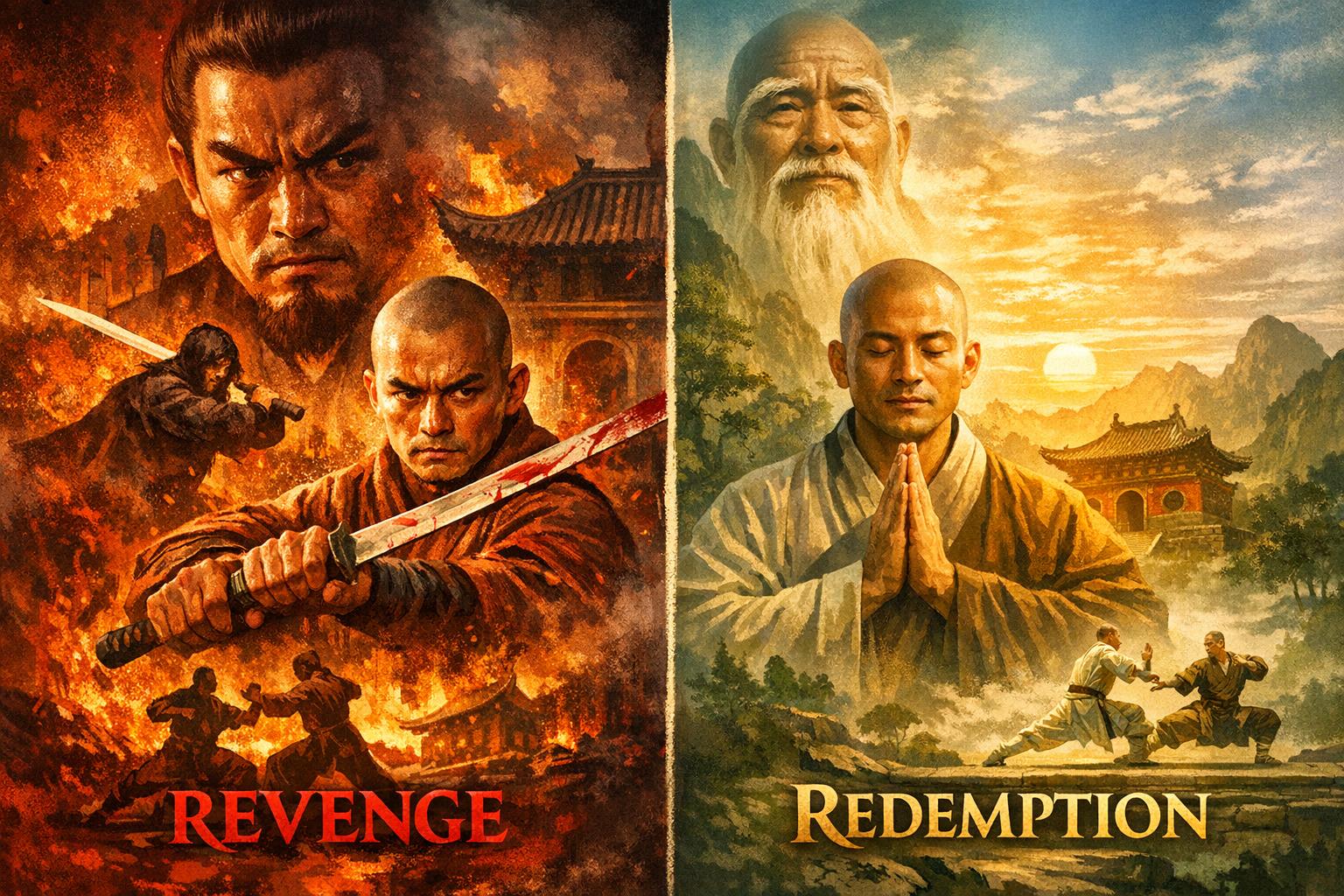
Themes of Revenge in Shaolin Films
Shaolin films often center on narratives propelled by revenge, structuring their plots around a profound personal loss, betrayal, or injustice experienced by the protagonist. These events are not incidental; they are foundational moments that define the trajectory of the character’s journey. The destruction of a village, the murder of a teacher, the betrayal of a fellow disciple, or the oppression of a corrupt regime frequently serve as inciting incidents. From this point, the narrative follows a disciplined progression in which the pursuit of vengeance becomes both a goal and a burden.
The theme of revenge in Shaolin cinema is rarely presented as a simple justification for violence. Instead, it functions as a narrative engine that drives character development and philosophical inquiry. The protagonist’s desire for retribution is typically depicted as understandable, even sympathetic, yet fraught with consequences. Revenge stories in this genre often balance kinetic martial arts sequences with reflective interludes that examine motivation, loyalty, and restraint. The martial confrontations are thus intertwined with ethical considerations, creating narratives that operate on both physical and moral planes.
Within these stories, revenge is commonly portrayed as a catalyst for transformation. The protagonist’s initial rage may lack refinement or direction, reflecting emotional turmoil. Over the course of the film, however, this raw impulse is subjected to the discipline of training and the guidance of Shaolin philosophy. As a result, revenge narratives become vehicles for exploring self-control, humility, and the proper use of martial skill.
A significant dimension of revenge in Shaolin films involves its intersection with the concept of wu de, often translated as martial virtue. Wu de encompasses principles such as righteousness, respect, restraint, and moral integrity. Characters seeking vengeance must reconcile their personal grievances with these ethical standards. This tension frequently forms the central dramatic conflict of the story. The protagonist may struggle to determine whether exacting revenge aligns with justice or merely perpetuates harm.
By juxtaposing the emotional immediacy of vengeance with the disciplined philosophy of Shaolin practice, these films create a layered narrative structure. Viewers are invited to observe not only the unfolding conflict but also the protagonist’s internal negotiation between impulse and doctrine. In many cases, the dramatic climax hinges as much on moral choice as on physical victory.
Shaolin Training as a Means to Empower Revenge
Training sequences in Shaolin films are rarely ornamental; they serve as structural pillars that shape the protagonist’s evolution. After suffering injustice, the central character often turns to the Shaolin Temple as a sanctuary and a training ground. The temple becomes a transformative space where grief and anger are channeled into disciplined effort. Rigorous physical exercises, meditative practices, and repetitive drills operate as narrative devices that signify both hardship and growth.
The portrayal of Shaolin training emphasizes endurance and humility. Characters sweep courtyards, carry water, or perform seemingly mundane tasks before gaining access to advanced techniques. This gradual progression underscores the principle that martial skill must be built upon character development. Revenge may motivate the character’s initial arrival, but sustained training requires patience and self-restraint. These qualities temper the volatility of unchecked anger.
Training montages often depict the body as a site of refinement. Bruises, exhaustion, and setbacks illustrate the cost of mastering martial arts. Yet the transformation extends beyond physical conditioning. Meditation scenes and dialogues with senior monks introduce philosophical context, reframing revenge as a potential source of imbalance. The protagonist learns that true strength lies not only in defeating opponents but also in mastering the self.
The empowerment derived from Shaolin training therefore functions on dual levels. Physically, the character acquires techniques capable of confronting adversaries. Mentally and ethically, the character gains perspective. In some narratives, this perspective alters the nature of the intended revenge. The protagonist may redefine justice from personal retaliation to the protection of others or the restoration of communal harmony.
The depiction of training also reflects a broader cinematic tradition in martial arts films, where preparation is as significant as confrontation. In Shaolin-centered stories, this preparation is inseparable from moral education. The temple is not merely a gymnasium but an institution grounded in spiritual discipline. As such, the act of training itself becomes a commentary on the responsibilities associated with martial expertise.
Moral Implications of Revenge in Shaolin Narratives
Shaolin films frequently present revenge as a morally ambiguous pursuit. While the initial injustice is often depicted in stark terms, the subsequent quest for retribution introduces complexity. The protagonist’s actions may endanger innocents, alienate allies, or compromise previously held values. These consequences are not peripheral; they are integrated into the narrative to illustrate the broader impact of violence.
The cyclical nature of revenge is a recurring theme. An act of retaliation can provoke further hostility, extending the conflict beyond its original scope. In some films, antagonists themselves are driven by prior grievances, creating a chain of retribution that spans generations. This structure highlights the difficulty of achieving definitive closure through violence alone.
Dialogues between protagonists and Shaolin mentors often articulate the philosophical critique of revenge. Mentors may question whether vengeance restores balance or merely satisfies ego. Such exchanges do not necessarily invalidate the protagonist’s emotions; rather, they contextualize them within a framework of ethical deliberation. The tension between emotional response and disciplined judgment forms a central axis of the narrative.
In many Shaolin stories, the climactic confrontation includes a moment of hesitation. The protagonist, having gained the upper hand, must decide whether to exact lethal revenge or exercise restraint. This moment signals the culmination of the character’s moral journey. The physical struggle resolves the external conflict, while the ethical choice resolves the internal one.
Justice in these films is often distinguished from revenge. Justice may involve exposing corruption, defending the vulnerable, or restoring order, whereas revenge centers on personal satisfaction. The distinction is subtle but significant. By navigating this boundary, Shaolin narratives contribute to broader discussions about the legitimacy of violence and the conditions under which it may be justified.
Redemption in Shaolin Films
Parallel to the theme of revenge, redemption occupies a central position in many Shaolin films. Redemption is not portrayed as an abstract ideal but as a practical outcome of disciplined reflection and moral reassessment. Characters who begin their journeys consumed by anger may, through training and introspection, adopt a more measured perspective.
Redemption arcs often involve a reorientation of purpose. Instead of pursuing private vendettas, protagonists may choose to defend their communities or protect the innocent. This shift does not negate the suffering that initiated the narrative; rather, it integrates that suffering into a broader commitment to justice or service. In this way, personal trauma is transformed into social responsibility.
Supporting characters play a critical role in facilitating redemption. Wise monks, fellow disciples, or even former adversaries may challenge the protagonist’s assumptions. Their influence underscores the communal dimension of Shaolin philosophy. Redemption is not achieved in isolation but through engagement with a moral community that upholds standards of conduct.
Importantly, redemption does not always require the abandonment of confrontation. In certain narratives, the protagonist still faces the antagonist in combat. The difference lies in motivation. The final battle may be framed not as an act of revenge but as a necessary defense of principles or people. This reframing allows the character to reconcile martial action with wu de.
Some Shaolin films extend the theme of redemption to antagonists as well. Villains may recognize the consequences of their actions or seek atonement. Although not universal, such portrayals contribute to the broader exploration of moral complexity. By allowing for the possibility of change, these narratives resist simplistic dichotomies between good and evil.
Pathways to Redemption
The pathways to redemption in Shaolin films are often marked by sacrifice and restraint. A character may forgo an opportunity to exact lethal revenge, accepting personal dissatisfaction in exchange for moral integrity. This decision is typically framed as an affirmation of disciplined principles over impulsive desire. The narrative suggests that mastery of the self surpasses domination of the opponent.
Meditation and reflection frequently accompany this shift. Scenes of quiet contemplation contrast with earlier depictions of anger-driven training, visually representing the character’s internal stabilization. The acceptance of impermanence, the release of resentment, and the commitment to ethical conduct signal a resolution that transcends physical victory.
In some cases, redemption entails restitution. A character who has caused harm while pursuing revenge may seek to repair damage or rebuild trust. This restorative aspect broadens the thematic scope beyond individual transformation, emphasizing the reconstruction of social bonds. The Shaolin framework, with its emphasis on harmony and discipline, provides an environment conducive to such efforts.
The conclusion of a Shaolin film often underscores the long-term consequences of the protagonist’s choice. A narrative that ends with unrestrained revenge may depict lingering instability or loss, whereas a resolution grounded in restraint and principle tends to suggest continuity and peace. These endings reinforce the broader philosophical orientation of the genre, highlighting the superiority of balanced judgment over unchecked retaliation.
Taken together, the intertwined themes of revenge and redemption in Shaolin films create narratives that combine action with ethical inquiry. Martial arts sequences provide visual intensity and dramatic engagement, but they are embedded within stories concerned with discipline, justice, and moral growth. The Shaolin Temple functions not only as a setting but as a conceptual framework through which personal grievances are examined and transformed.
By situating revenge within the boundaries of wu de and emphasizing the possibility of redemption, Shaolin films offer a sustained exploration of how power should be exercised. They depict martial skill as a capacity that demands ethical guidance. In doing so, these films contribute to a cinematic tradition where combat is inseparable from character and where the resolution of conflict ultimately depends on the mastery of both body and mind.
This article was last updated on: June 25, 2026