

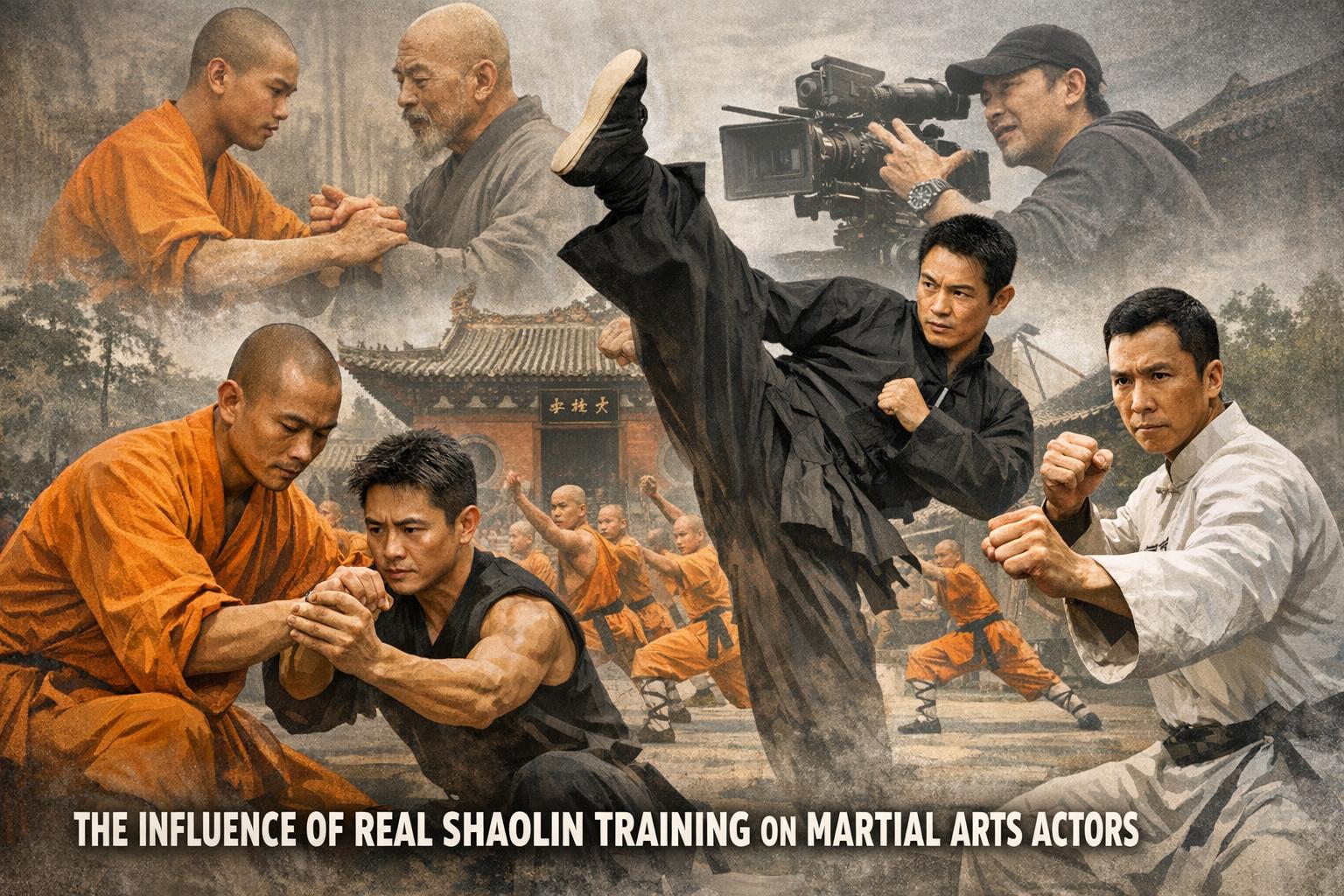
The Historical Context of Shaolin Training
The Shaolin Monastery, located in Henan Province, China, occupies a distinctive place in the history of martial arts and religious practice. Founded in the late fifth century during the Northern Wei dynasty, the monastery was originally established as a center for Buddhist study and meditation. Over time, it developed a reputation not only as a religious institution but also as a center for martial training. The evolution of Shaolin martial arts was gradual and shaped by social, political, and cultural factors that influenced China across successive dynasties.
Early records suggest that the monks of Shaolin engaged in physical conditioning as a supplement to seated meditation. Long hours of stillness required exercises to maintain circulation, strength, and overall health. These exercises were gradually systematized into structured routines. While popular folklore often attributes the origin of Shaolin martial arts to the Indian monk Bodhidharma, historical evidence indicates that martial practices emerged through a combination of indigenous Chinese fighting methods and the practical needs of monastic communities. Monasteries during certain periods required means of self-defense due to banditry and regional conflicts.
By the Tang dynasty, Shaolin monks had reportedly aided imperial forces in military campaigns, reinforcing the monastery’s association with combat skill. Over centuries, the temple’s martial curriculum expanded to include empty-hand techniques, weapons training, and conditioning practices. These methods were preserved through apprenticeship models in which masters transmitted knowledge directly to selected disciples. The integration of Chan Buddhism—known as Zen in Japan—shaped the philosophical dimension of training, emphasizing awareness, discipline, and the unity of thought and action.
As centuries progressed, Shaolin became both a historical institution and a cultural symbol. Although the monastery faced destruction and reconstruction multiple times, particularly in periods of political upheaval, its methods survived through dispersed practitioners and affiliated temples. In the twentieth century, renewed interest in traditional martial arts, combined with state-sponsored development of performance-based Wushu, reintroduced Shaolin practices to national and international audiences. Today, Shaolin training represents both a living tradition and a reconstructed heritage shaped by historical documentation, oral transmission, and contemporary interpretation.
Shaolin and Its Impact on Martial Arts Actors
The global popularity of martial arts cinema in the twentieth century introduced Shaolin traditions to a broader public. Film studios in Hong Kong and later in mainland China sought performers who could demonstrate credible fighting skills. As a result, actors increasingly pursued rigorous martial arts training prior to or during their film careers. For some, this training included direct study at Shaolin Temple or at schools influenced by its curriculum.
Authentic Shaolin training differs from choreography designed solely for performance. While film fighting prioritizes camera angles, pacing, and visual clarity, traditional instruction emphasizes biomechanics, stance stability, breath control, and repetitive conditioning. Actors who undergo real training often report improvements in balance, flexibility, and coordination. These qualities make complex sequences safer and more precise during filming.
In addition to physical benefits, exposure to Shaolin philosophy can influence how performers approach their roles. Concepts such as restraint, discipline, and intentional movement contribute to portrayals that extend beyond superficial imitation. Rather than executing isolated techniques, trained actors may embody transitions and postural alignments consistent with traditional systems. This authenticity can be visible even when choreography is adapted for cinematic effect.
The presence of genuinely trained martial artists in leading roles also influenced casting decisions and production standards. Directors began incorporating longer takes and wider camera angles to showcase actual skill, reducing reliance on rapid editing. Over time, audiences developed a greater appreciation for technical proficiency, encouraging actors to seek deeper preparation rather than relying entirely on stunt doubles.
Case Studies of Actors with Shaolin Training
Several prominent film actors illustrate the connection between Shaolin traditions and cinematic performance. Jet Li began studying martial arts at a young age, training in modern Wushu under professional coaches in Beijing. Although his competitive background emphasized performance routines, Wushu itself draws heavily on traditional Shaolin forms and northern Chinese martial systems. Li’s precision, speed, and flexibility reflect years of disciplined repetition. In films such as historical martial arts dramas, his movements often display extended stances and clearly defined lines rooted in classical training.
Donnie Yen provides another example of cross-disciplinary experience. Raised in a family deeply engaged in martial arts research and instruction, Yen studied various systems, including elements connected to Shaolin. He later incorporated influences from multiple disciplines, blending traditional structure with contemporary combat sports. His approach to choreography emphasizes practicality and efficiency while retaining stylistic characteristics inherited from classical methods. This combination underscores how Shaolin-derived principles can coexist with modern innovation.
Other performers have spent time training directly at Shaolin Temple or under monks affiliated with its lineage. Some international actors preparing for specific roles have undertaken short-term immersion programs to enhance realism. These training periods often involve early morning conditioning, stance practice, and repetition of fundamental forms. Although brief exposure does not equate to lifelong study, it can provide performers with experiential insight into the discipline demanded by traditional instruction.
The experiences of these actors demonstrate varying degrees of engagement rather than a single standardized pathway. Shaolin influence may range from foundational childhood training to supplementary workshops designed to refine technique for film production. In each case, the interaction between heritage practice and screen performance illustrates the adaptive capacity of martial traditions.
Training Routines and Techniques
Real Shaolin training is structured around foundational skills that precede advanced techniques. Beginners often spend considerable time developing stance work, such as the horse stance and bow stance, which condition the legs and establish postural alignment. These static positions are maintained for extended durations to strengthen muscles and cultivate endurance. Repetition fosters muscle memory and reinforces structural integrity.
Following fundamental conditioning, practitioners learn choreographed forms that sequence strikes, kicks, blocks, and transitions. These forms serve multiple purposes: they preserve technical knowledge, enhance coordination, and train spatial awareness. Students practice forms slowly to refine accuracy before increasing speed. Precision remains a central requirement, as minor deviations can compromise balance or effectiveness.
Weapons training constitutes another significant dimension. Traditional Shaolin curriculum includes staff, broadsword, straight sword, spear, and other implements. Each weapon demands specialized grips, footwork, and timing. Weapons practice also enhances overall motor control, as the added weight and length of implements require careful management of momentum.
Partner drills and controlled sparring introduce reactive elements. Unlike choreographed sequences, sparring necessitates adaptation to changing circumstances. Practitioners learn distance management, timing, and defensive awareness. In structured settings, instructors supervise exchanges to minimize risk while maintaining realism.
An integral component of Shaolin training involves qigong, a system of breath regulation coordinated with movement or static posture. Qigong exercises aim to improve respiratory efficiency, concentration, and physical resilience. Slow, deliberate breathing patterns accompany controlled motions, reinforcing the connection between physiological processes and mental focus. Some advanced practices involve isometric tension or impact conditioning, though these are introduced progressively under supervision.
The daily routine in traditional settings can be demanding. Early morning sessions may begin with conditioning runs, followed by stretching and foundational stances. Later sessions concentrate on forms or weapons, concluding with meditation or seated reflection. The integration of meditation distinguishes Shaolin practice from purely athletic training, reinforcing attentional control and emotional regulation. While modern schools adapt schedules to contemporary lifestyles, many retain the principle of balancing exertion with contemplative practice.
The Broader Influence on Film and Culture
Shaolin traditions have influenced cinematic narratives beyond technical choreography. Many martial arts films incorporate themes derived from monastic life, including discipline, humility, and perseverance. Storylines frequently depict protagonists undergoing rigorous instruction before mastering adversity. This narrative structure parallels the training progression within traditional schools, where advancement emerges from sustained effort rather than sudden acquisition of skill.
Cultural representations of Shaolin also contribute to public perceptions of Chinese martial heritage. Films often portray the monastery as a repository of ancient wisdom, blending documented history with fictional embellishment. Although dramatization sometimes exaggerates capabilities or simplifies philosophy, it nonetheless stimulates interest in historical investigation and training.
International dissemination of Shaolin-inspired performances, including touring demonstration teams, has further expanded global awareness. These demonstrations showcase synchronized forms, weapons routines, and conditioning feats. While performance teams emphasize spectacle, they also preserve elements of traditional curriculum, serving as ambassadors of the monastery’s evolving identity.
Contemporary training centers around the world draw upon Shaolin methodologies while adapting to local contexts. Some operate as cultural institutions offering language study and Buddhist philosophy alongside martial arts. Others function primarily as fitness-oriented academies, emphasizing conditioning benefits. This diversity reflects the adaptability of the system and its capacity to address varied objectives, from professional performance to personal development.
In academic contexts, researchers examine Shaolin practices through perspectives including anthropology, religious studies, and sports science. Studies of biomechanics analyze stance alignment and force generation, while historical scholarship evaluates archival documents to clarify origins. Such research contributes to a more nuanced understanding that distinguishes historical fact from legend without diminishing cultural significance.
The interaction between traditional practice and modern media continues to shape global appreciation of martial arts. As actors pursue authentic preparation and audiences become more informed, the distinction between superficial imitation and disciplined mastery becomes increasingly evident. Shaolin training, with its integration of physical rigor and philosophical orientation, remains a reference point within this evolving landscape.
Individuals seeking exposure to Shaolin methods can find programs ranging from short workshops to long-term residential study. The scope and authenticity of these programs vary, making careful evaluation advisable. Nonetheless, the sustained interest demonstrates the enduring relevance of a system that emerged from a monastic context more than fifteen centuries ago.
Through its historical development, influence on performers, structured training methods, and cultural representation, Shaolin practice occupies a multifaceted position. It is simultaneously a religious tradition, a martial discipline, and a component of global popular culture. Its continued transmission depends on practitioners, educators, scholars, and artists who engage with its methods in contexts that bridge heritage and contemporary application.
This article was last updated on: April 14, 2026