

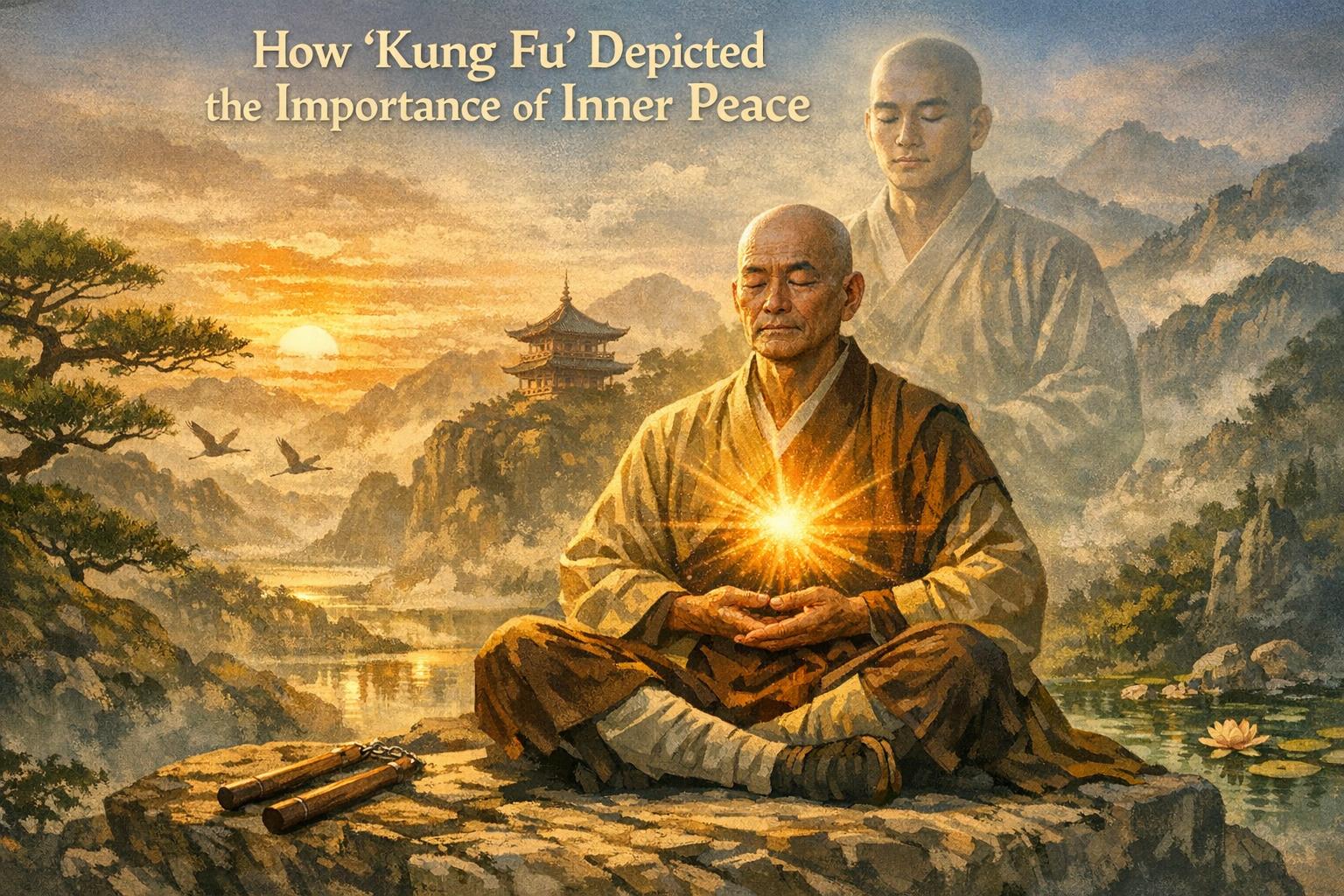
Introduction to Inner Peace in Kung Fu
Inner peace occupies a foundational position within the theory and practice of Kung Fu. While the external image of Kung Fu often centers on striking techniques, defensive maneuvers, and impressive physical conditioning, its internal framework places equal, if not greater, emphasis on cultivating a stable and disciplined mind. In traditional schools of instruction, physical technique is regarded as incomplete without the development of mental composure and emotional regulation. Mastery is therefore defined not only by technical proficiency but also by the practitioner’s ability to maintain steadiness under pressure.
In classical Chinese martial thought, combat skill without inner balance is considered unstable. An agitated mind disrupts timing, perception, and judgment. By contrast, a calm and collected state of awareness enhances responsiveness and precision. For this reason, inner peace is not presented as a passive withdrawal from conflict but as an active condition of mental clarity that enables effective action. Kung Fu thus integrates physical, mental, and philosophical training into a unified discipline designed to refine the practitioner as a whole.
The Philosophical Foundations of Inner Peace
The theoretical underpinnings of Kung Fu are strongly influenced by Taoist and, in some traditions, Buddhist and Confucian principles. Taoism, in particular, emphasizes alignment with the Tao, often translated as the “Way.” This concept refers to the underlying natural order of the universe. To follow the Tao involves recognizing patterns of change, adapting fluidly to circumstances, and acting without unnecessary resistance.
A central Taoist principle relevant to Kung Fu is wu wei, commonly understood as non-forced action. This does not imply inaction but rather the avoidance of excessive strain or artificial effort. In martial practice, wu wei is expressed through movements that are economical, direct, and responsive rather than rigid or aggressive. A practitioner rooted in inner peace does not overreact or tense unnecessarily. Movements remain controlled and efficient because the mind is not clouded by fear or anger.
The concept of qi, or vital energy, also plays a significant role. Traditional teaching describes qi as the dynamic life force circulating through the body. While interpretations vary between symbolic and physiological perspectives, its practical implication in training is clear: breath control, posture, and relaxation contribute to stability and endurance. Disturbance in the mind is thought to disrupt the balanced flow of qi. By maintaining inner calm, practitioners aim to harmonize breath and movement, thereby stabilizing both mental and physical performance.
Confucian influence further supports the ethical dimension of inner peace. Discipline, respect, and self-restraint are cultivated not merely for social conformity but to regulate impulses and maintain order within oneself. Together, these philosophical foundations frame inner peace as a cultivated and intentional state rather than an incidental outcome.
Training Methods That Cultivate Mental Tranquility
Kung Fu training methodologies systematically develop inner steadiness alongside physical conditioning. Meditation is frequently integrated into practice, particularly in traditional schools. Seated meditation trains sustained attention, breath awareness, and observation of thought patterns without immediate reaction. Over time, this exercise reduces impulsivity and supports emotional regulation.
Standing meditation, known in some systems as zhan zhuang, further refines internal composure. Practitioners hold structured postures for extended periods, focusing on alignment and breath. Although physically demanding, the practice encourages mental stillness. Tension in the body becomes apparent and is gradually released. The combination of stillness and structured posture enhances concentration and postural integration.
Breathing exercises are equally significant. Controlled breathing regulates the nervous system, supporting balance between alertness and relaxation. In sparring or forms practice, steady breath prevents abrupt fatigue and stabilizes attention. When breathing becomes erratic, thoughts often follow a similar pattern. By anchoring awareness to breath, practitioners maintain clearer perception during complex movements.
Forms training, consisting of choreographed sequences of techniques, also contributes to inner peace. Though externally dynamic, forms require deliberate pacing and continuous attention. Each movement transitions into the next without interruption. Practicing forms refines rhythm, coordination, and spatial awareness. At advanced levels, the practitioner performs without internal commentary, allowing learned technique to flow spontaneously. This state reflects integration between conscious intention and trained instinct.
Controlled sparring introduces a different dimension. Interaction with a partner tests the stability cultivated during solo practice. The unpredictability of an opponent requires adaptability. If frustration or fear arises, timing deteriorates. The practitioner learns to recognize these reactions without allowing them to dominate performance. Over time, sparring becomes less about defeating an opponent and more about maintaining balance under dynamic conditions.
Inner Peace and Combat Effectiveness
Although inner peace may seem abstract, it has measurable implications for technical execution. Reaction time improves when perception is unobstructed by hesitation. Decision-making becomes more efficient when attention is not fragmented by competing emotional responses. Physical energy is conserved because unnecessary muscular tension is reduced.
In martial engagement, excessive aggression often leads to overcommitment. A composed practitioner observes openings rather than forcing them. Maintaining calm allows for flexible responses rather than rigid patterns. The capacity to disengage when appropriate is also strengthened by inner stability. In many traditional teachings, the highest level of skill involves resolving conflict with minimal force.
Balance, both literal and metaphorical, is enhanced by mental composure. Postural alignment improves when the body is not tightened by anxiety. Footwork remains coordinated because attention is evenly distributed. These elements collectively illustrate how inner peace directly influences combat performance without romanticizing the concept.
Representation in Literature and Film
Popular representations of Kung Fu frequently depict inner peace as the decisive factor in a character’s growth. Narratives often portray individuals who begin with technical talent but lack emotional control. Through disciplined training and introspection, they gradually achieve mental clarity, which then enables them to apply their skills effectively.
Films such as Crouching Tiger, Hidden Dragon present characters whose internal struggles affect their martial abilities. Scenes of stillness, reflection, or meditative practice precede moments of technical mastery. While dramatized for storytelling purposes, these portrayals reflect authentic principles within traditional instruction: internal alignment precedes external refinement.
Other cinematic works illustrate a mentor guiding a student toward self-understanding. Training sequences typically emphasize repetition, patience, and humility. Though simplified for narrative clarity, such themes correspond to the pedagogical emphasis found in established Kung Fu schools. The depiction of inner peace in media serves as a narrative device but draws upon genuine philosophical traditions.
Application Beyond Martial Practice
The discipline developed through Kung Fu training extends into daily life. Emotional self-regulation cultivated in sparring or meditation can be applied to professional and personal contexts. Remaining composed under stress improves communication and problem-solving. The same attentiveness used in forms practice enhances focus in routine tasks.
Time management and perseverance are reinforced through structured training schedules. Progress in Kung Fu is incremental and requires consistency. This gradual development encourages patience and long-term planning. Inner peace in this broader sense becomes the ability to approach challenges without reactive escalation.
Ethical conduct is another extension. Traditional martial instruction emphasizes restraint and responsibility. Skill is not intended for intimidation but for protection and self-cultivation. By internalizing these principles, practitioners integrate technical ability with moral awareness.
The Integration of Body and Mind
A defining characteristic of Kung Fu is the inseparability of physical and mental training. Strength without control is considered incomplete, and contemplation without disciplined action is regarded as insufficient. Forms, conditioning, sparring, and meditation are interdependent components of a unified curriculum.
Neuromuscular coordination improves when attention is steady. Repetition embeds patterns into procedural memory, reducing cognitive strain during execution. This embodied knowledge allows practitioners to act without hesitation while remaining aware of their environment. Inner peace, in this context, refers to reduced internal conflict between intention and action.
Scientific perspectives on motor learning and stress response offer partial parallels to traditional explanations. Focused breathing influences autonomic regulation. Attention training enhances cognitive stability. While classical terminology such as qi conveys these processes symbolically, the observable outcome remains consistent: mental composure supports physical precision.
Conclusion
Kung Fu presents inner peace as an essential condition for comprehensive mastery. Rooted in Taoist and related philosophical traditions, this concept integrates ethical discipline, breath regulation, meditative practice, and controlled physical training. Inner tranquility is not portrayed as withdrawal from action but as the stabilizing foundation that makes effective action possible.
Through sustained practice, practitioners learn to regulate emotion, sustain concentration, and align movement with intention. These qualities enhance combat effectiveness while also providing transferable skills applicable to everyday life. The depiction of inner peace in literature and film reflects genuine principles embedded within traditional instruction, though often simplified for narrative clarity.
Ultimately, Kung Fu frames inner peace as a cultivated state achieved through deliberate effort and consistent discipline. By harmonizing mind and body, practitioners pursue balanced development that extends beyond technical proficiency, shaping both character and capability in measurable ways.
This article was last updated on: August 4, 2026