

The Origins of Shaolin Cinema
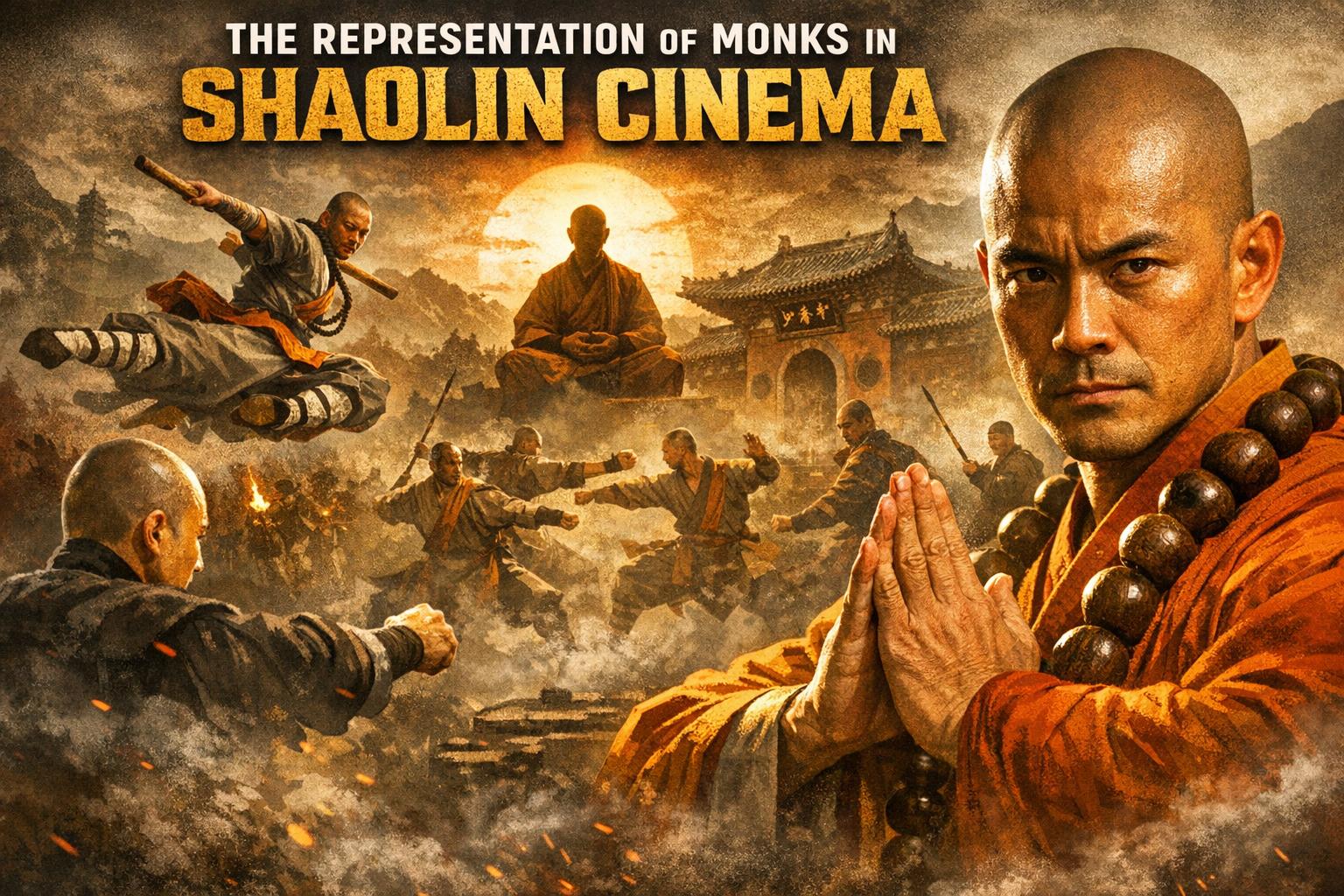
In the realm of martial arts films, the representation of monks, particularly those from the famed Shaolin Temple, holds a significant and storied role. The depiction of these monks in cinema is not merely an artistic choice but is deeply rooted in the historical and cultural legacy of the Shaolin Temple in China. Over decades of film production, the image of the Shaolin monk has evolved into one of the most recognizable archetypes within global martial arts cinema. This evolution reflects broader social, political, and artistic movements that shaped both Chinese film industries and international perceptions of East Asian culture.
The cinematic figure of the Shaolin monk exists at the intersection of religion, folklore, and martial performance. While film adaptations often dramatize or fictionalize events, they draw upon a body of legends and historical narratives that have circulated for centuries. As a result, Shaolin cinema operates not only as entertainment but also as a medium through which cultural identity, moral codes, and historical memory are repeatedly negotiated and reconstructed.
Historical Context
The Shaolin Temple, founded in 495 CE during the Northern Wei Dynasty, occupies an important place in Chinese religious and martial history. Located on Mount Song in Henan Province, it became associated with the introduction and development of Chan (Zen) Buddhism in China. According to tradition, the Indian monk Bodhidharma traveled to Shaolin and introduced meditative practices that later became foundational to Chan thought. Though some aspects of this narrative remain debated among historians, the symbolic linkage between Bodhidharma, meditation, and bodily discipline profoundly influenced subsequent interpretations of Shaolin practices.
Over the centuries, Shaolin monks acquired a reputation for martial skill. Historical records indicate that monks participated in military engagements, including assistance to imperial armies during periods of unrest. The mingling of monastic life with martial activity produced a distinctive institutional identity. Rather than separating spiritual cultivation from physical training, Shaolin practice integrated them. This integration later provided fertile material for cinematic storytelling, as film narratives could frame martial proficiency as an outward manifestation of inner cultivation.
The historical Shaolin Temple also endured destruction and rebuilding at several points, particularly in the turbulent transitions between dynasties. These episodes contributed to the mythology of resilience surrounding the temple. Legends about its burning and subsequent survival became recurring motifs in literary and theatrical traditions, and eventually in cinema. As such, the historical context is not simply background material; it forms a narrative reservoir from which filmmakers repeatedly draw.
Literary Foundations and Pre-Cinematic Narratives
Before the emergence of film, Shaolin monks appeared in vernacular literature, opera, and oral storytelling traditions. Ming and Qing dynasty novels such as Water Margin incorporated martial monks as supporting characters or instructors. Popular tales described prodigious feats of strength, secret training manuals, and moral tests. These narratives emphasized loyalty, discipline, and resistance against corrupt authority.
Chinese opera traditions further established visual conventions associated with monastic warriors, including shaved heads, simple robes, and highly stylized combat movements. When cinema emerged in the early 20th century, filmmakers inherited these performance codes. Early martial arts films often adapted stories already familiar to audiences through opera and literature, ensuring that the image of the Shaolin monk was quickly recognizable.
This pre-cinematic genealogy shaped audience expectations. Viewers anticipated not only displays of combat skill but also moral arcs grounded in Confucian and Buddhist ethical frameworks. As a result, early Shaolin-themed films did not need to construct their symbolic vocabulary from scratch. Cinematic representation was layered upon existing cultural forms, reinforcing continuity even as filmmaking technology introduced new modes of spectacle.
Portrayal in Early Cinema
The early depictions of Shaolin monks in film can be traced back to the mid-20th century on Chinese cinema screens, where the themes of justice and discipline were frequently explored. During the Republican era and into the postwar period, martial arts films emerged as a popular genre. Although production faced interruptions due to political upheaval and war, filmmakers consistently revisited historical and semi-historical subjects, including monastic warriors.
In these early films, monks were often characterized as protectors of the weak, fighting against oppressive officials or foreign invaders. They embodied benevolence and righteousness, echoing both Buddhist and Confucian virtues. The tension between monastic vows and martial engagement created dramatic structure: characters regularly confronted the dilemma of whether violence could be justified in defense of moral order.
Cinematic techniques in this period were relatively restrained compared to later productions. Fight scenes relied heavily on choreography derived from opera, with limited editing and special effects. Nonetheless, the physicality of actors, combined with carefully staged sets evoking temple architecture, reinforced the authenticity of the Shaolin environment. Audiences were invited to perceive the temple as simultaneously sacred space and training ground.
Political Influence and Ideological Framing
The political climate of mid-20th century China, including the establishment of the People’s Republic of China in 1949, influenced how religious institutions were portrayed. During certain periods, overtly religious themes were downplayed, and narratives emphasized patriotic resistance or class struggle rather than spiritual enlightenment. In such cases, Shaolin monks were framed less as religious figures and more as disciplined collectives representing national strength.
In Hong Kong cinema, which developed under different political conditions, filmmakers explored Shaolin myths with greater stylistic freedom. Studios such as Shaw Brothers capitalized on the popularity of historical action narratives, often presenting Shaolin as a symbol of Chinese cultural continuity. This dual development—mainland restraint and Hong Kong elaboration—contributed to the diversification of Shaolin cinema.
The Kung Fu Film Boom
The international spread of martial arts films, especially during the 1970s and 1980s, brought Shaolin monks to a global audience. Iconic films like The 36th Chamber of Shaolin dramatically reshaped public perception of these religious warriors. Produced by Shaw Brothers and directed by Lau Kar-leung, the film depicted an extended training process inside the temple, structuring the narrative around progressive mastery of increasingly difficult challenges.
Kung Fu cinema became a dominant force, casting the Shaolin monk as a central figure who masters martial arts through intense training and inner discipline. The training montage emerged as a defining narrative device. Rather than presenting martial prowess as innate, films emphasized repetitive labor, humility, and endurance. The temple was represented as an institutional system of education, with hierarchical chambers and instructors overseeing moral and physical progress.
During this period, international audiences began to associate Shaolin imagery with broader notions of Eastern philosophy. Although these associations were often simplified, the cinematic presentation of meditation, ritual, and master-disciple relationships shaped global popular culture. Actors such as Gordon Liu became iconic embodiments of monastic discipline, and their performances intensified the genre’s aesthetic coherence.
Bruce Lee and Transformational Influence
While Bruce Lee was not primarily associated with Shaolin monk roles, his films contributed significantly to the international appetite for martial arts cinema. His emphasis on authenticity, physical conditioning, and philosophical reflection influenced subsequent Shaolin-themed productions. Filmmakers sought to align temple narratives with contemporary sensibilities, incorporating faster pacing and more dynamic choreography.
The globalization of distribution channels, including dubbing and international theatrical release, ensured that Shaolin cinema was no longer confined to Chinese-speaking audiences. The temple became a cinematic symbol accessible to viewers with limited familiarity with Chinese history. This shift encouraged filmmakers to clarify narrative motivations and emphasize universal themes such as perseverance and ethical self-improvement.
The 1982 Film “Shaolin Temple”
A pivotal moment occurred with the release of the mainland Chinese film Shaolin Temple in 1982, starring Jet Li in his screen debut. Filmed on location at the actual temple, the production blended historical setting with contemporary athletic performance. The film achieved significant commercial success domestically and contributed to renewed interest in Shaolin martial arts training within China.
This production also marked a shift toward greater cooperation between state institutions and filmmakers in presenting cultural heritage. The temple was framed as both historical monument and living tradition. Tourism increased, and martial arts schools associated with Shaolin experienced growth. Cinema thus functioned not only as representation but as catalyst for real-world cultural revival.
Choreography, Training, and Aesthetic Codes
Central to Shaolin cinema is the depiction of disciplined bodily movement. Choreographers often draw upon authentic Northern Shaolin styles characterized by extended stances, acrobatic kicks, and fluid transitions. Weapons training—including the staff, spear, and sword—features prominently. Films present these techniques not merely as combat tools but as structured curricula overseen by senior monks.
The visual contrast between simplicity of costume and complexity of movement reinforces thematic coherence. Shaved heads, plain robes, and monastic architecture frame the body as primary expressive instrument. Editing rhythms intensified over time, especially with the introduction of wirework and digital enhancement, yet the underlying emphasis on training and repetition typically remains intact.
Recent Cinematic Trends
In recent years, the portrayal of Shaolin monks in cinema has evolved, often incorporating more nuanced perspectives. Modern filmmakers have emphasized not only martial capabilities but also spiritual inquiry, ethical ambiguity, and institutional challenges. Some productions explore the tension between commercial tourism and monastic authenticity, reflecting contemporary debates about cultural commodification.
High-budget international collaborations have introduced advanced visual effects, expanding the scale of action sequences. At the same time, certain independent films adopt a restrained approach, focusing on character development and philosophical dialogue. This diversification suggests that the Shaolin monk is no longer confined to a single narrative function.
Television series and streaming platforms have further broadened representation. Long-form storytelling allows for extended exploration of historical context, interpersonal dynamics within the temple, and complex antagonists. While action remains central, greater attention is often given to theological discussion and the psychological consequences of violence.
Cultural Exchange and Global Reinterpretation
The global circulation of Shaolin imagery has resulted in reinterpretation beyond Chinese cinema. Western films, animated series, and video games frequently adopt monastic warrior archetypes inspired by Shaolin traditions. These adaptations range from historically informed depictions to highly stylized fantasy analogues. Although such reinterpretations may diverge from historical reality, they demonstrate the adaptability of the archetype.
Academic analysis increasingly examines how Shaolin cinema mediates cultural identity in transnational contexts. Scholars investigate questions of authenticity, orientalism, and industrial strategy. The monk figure functions both as exportable cultural emblem and as site of negotiation over representation.
Conclusion
The cinematic depiction of Shaolin monks reflects a layered interplay between history, legend, religious practice, and film industry development. From early opera-influenced productions to globally distributed kung fu classics and contemporary reinterpretations, the Shaolin monk has remained a durable figure in martial arts cinema. The persistence of this image can be attributed to its structural flexibility: it accommodates narratives of discipline, resistance, pedagogy, and philosophical inquiry.
As film technologies and audience expectations continue to change, Shaolin cinema is likely to adapt accordingly. Yet its core elements—training, moral cultivation, and institutional lineage—remain anchored in historical memory. The Shaolin monk on screen thus represents more than an action hero; he embodies a continuing dialogue between past and present, spirituality and spectacle, national heritage and global media circulation.
This article was last updated on: March 3, 2026